


Families ask this for two reasons: funeral costs and the pull of keeping someone close. Home burial is legal across most of the country, which surprises people. The complication is that permission comes from three separate levels, and any one of them can stop you cold.
Short answer: In most states, yes. Can you bury someone on your property without breaking the law? Usually you can. You need to own the land, file the death certificate, get a burial transit permit, clear county zoning and setbacks, and record the grave on the deed. California, Indiana, and Washington are the exceptions.
TL;DR: key takeaways
- Roughly 46 states allow burial on private land, subject to conditions that are set locally rather than nationally.
- Three states, California, Indiana, and Washington, require interment in an established cemetery.
- About nine states require a licensed funeral director to handle the remains or the filings.
- The grave normally has to be disclosed and recorded, thereby creating a permanent encumbrance on the title.
- Cremated remains sit in a far looser category than a full body burial.
- Every rule below is state- and county-specific, so confirm yours in writing before anyone digs.
Home burial at a glance
| Requirement | What it usually means | Who decides |
|---|---|---|
| State permission | Allowed in most states, banned in three | State legislature and health department |
| Death certificate | Filed within roughly three to five days of death | Local registrar or vital records office |
| Burial transit permit | Required before the body is moved or buried | County registrar |
| Funeral director | Mandatory in about nine states | State funeral licensing board |
| Acreage and setbacks | Rural parcels qualify, small urban lots rarely do | County zoning and planning |
| Deed notation | Grave recorded and disclosed on sale | County recorder or clerk |
Can you bury someone on your property in every state?
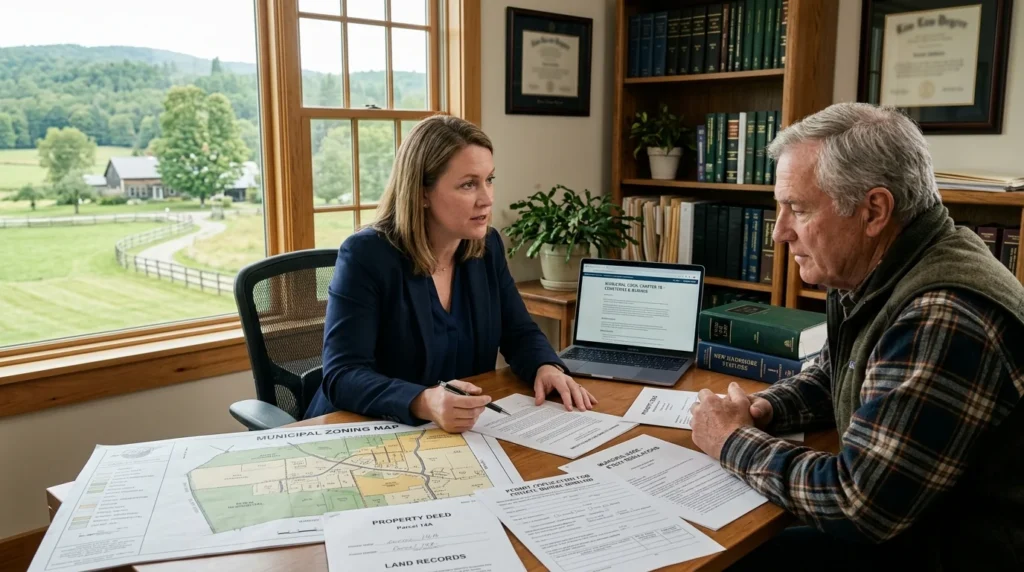
No. Three states close the door almost entirely. California requires that human remains be interred in a licensed cemetery, Indiana ties burial to an established cemetery, and Washington routes disposition through a cemetery authority. Several other states allow it on paper while narrowing the practical path.
These bans change through legislation rather than through court rulings, so a state that says no today may not say no forever. If you live somewhere with an active statehouse, it is worth tracking recent changes to California law and similar updates elsewhere before you assume the answer is settled.
| State | Burial on private land | Notable condition |
|---|---|---|
| California | Not permitted | Remains must go to a licensed cemetery |
| Indiana | Not permitted | Burial must occur in an established cemetery |
| Washington | Not permitted | Disposition runs through a cemetery authority |
| New York | Allowed but tightly controlled | A licensed funeral director must handle the remains and filings |
| Texas | Allowed outside town buffer zones | Buffers of one to five miles from a municipality, scaled by population |
| Massachusetts | Allowed with approvals | Board of health sign off, burial noted on the deed |
| Oregon | Allowed | Written consent from the planning commission, disclosure on sale |
The paperwork chain, in order
Most guides skip this part, and it is where families get stuck at nine on a Sunday night. The sequence rarely changes, even though the office names do.
- Pronouncement of death. The attending physician, hospice nurse, or medical examiner signs the medical portion of the certificate.
- Death certificate filing. The certificate is sent to the local registrar, typically within 3 to 5 days, depending on the state.
- Burial transit permit. The registrar issues this, and it legally authorizes you to move the body and place it in the ground.
- Zoning or land use sign-off. Some counties want written consent from planning before the grave is dug.
- Recording. After the burial, the location is filed with the county and noted on the deed.
Write your wishes down long before any of this is needed. Burial instructions belong in the estate file alongside the will. It is worth asking a will lawyer to draft the burial directive, so nobody argues about intent while a clock runs.
Do you have to hire a funeral director?
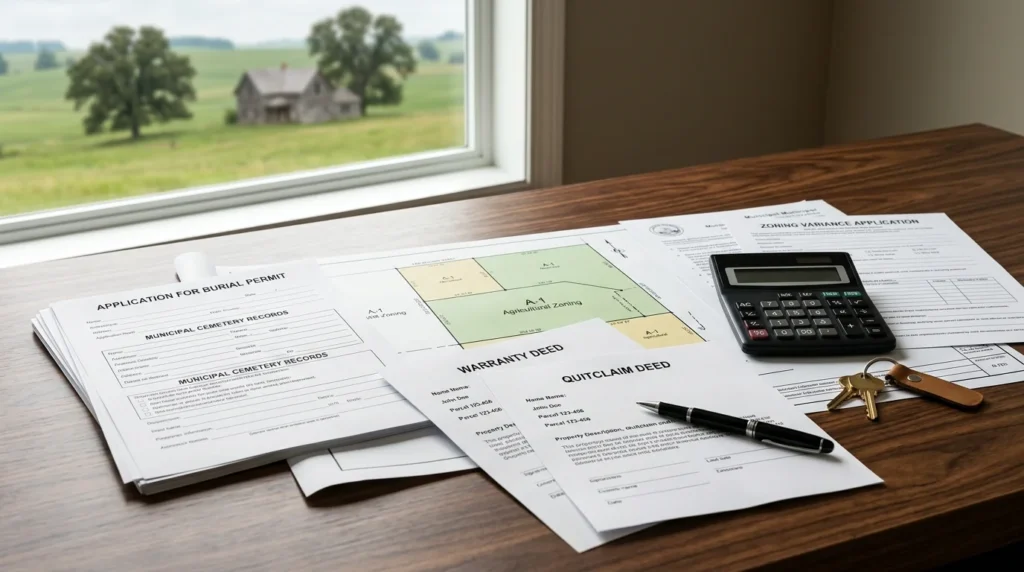
In roughly nine states, you do. Connecticut, Illinois, Indiana, Iowa, Louisiana, Michigan, Nebraska, New Jersey, and New York all require a licensed funeral director. That director may have to handle the remains, the transport, or the disposition filings. Everywhere else, the family can legally act as the responsible party.
Families often assume a funeral home has to run the whole process, and that assumption is the costliest myth here. According to the Federal Trade Commission, its Funeral Rule took effect in 1984 and continues to govern funeral sales in 2026. Buyers may purchase only the goods and services they want. The FTC also states that no state law requires routine embalming for every death. Refrigeration is usually an accepted alternative, and that single point often decides whether a home burial is affordable.
Land rules: acreage, setbacks, and grave depth
State law grants permission. County zoning determines whether your specific parcel qualifies for a home burial, and this is the gap that catches suburban homeowners off guard. Half-acre lots within city limits are almost never approved, even if state statute allows them.
The numbers are genuinely local. Massachusetts guidance for local boards of health outlines its shape. MassDEP recommends at least 300 feet between a single grave and a private well. That same guidance calls for three feet of soil over the body and keeps graves out of FEMA velocity zones and on land mapped within the 100-year floodplain.
Other states set their own distances from streams, wetlands, dwellings, and property lines. Texas takes a different approach and requires new cemeteries to be located one to five miles from municipalities, scaled to town population.
Ask your county for the setback table in writing. Verbal approval from a clerk is not a permit, and you cannot undo a grave that lands in the wrong place.
Recording the burial on your deed
This step is the one families most often learn about too late. A grave is treated as a permanent feature of the land, not a private family matter, so the county wants it on the record. Massachusetts requires the burial to be noted on the deed as an encumbrance before any transfer. Oregon requires owners to keep permanent records of the burial and to disclose them when the property is sold.
Practically, that means a survey or plat showing the grave location, a filing with the county recorder, and language added to the deed. It is ordinary conveyancing work, and understanding the transactional law behind deeds and recording makes the process far less intimidating. Budget for a title attorney and a surveyor rather than trying to file it yourself.
What a grave does to resale value
Nobody in the funeral trade wants to discuss this, so let’s be blunt. Any recorded burial narrows your buyer pool. Some buyers walk away on sentiment alone, others because they wanted to subdivide the parcel and a grave complicates that plan.
Appraisers rarely assign a fixed dollar penalty, and there is no reliable national figure to quote. What agents report instead is longer time on market and more negotiation. Lenders and title insurers may also ask questions about access rights, since descendants often retain a legal right to visit a family plot. Sellers should treat the grave as a disclosure item from day one. Staying current with shifts in real estate law helps you understand what your state expects you to reveal.
Can the remains be moved later?
Sometimes, but not casually. Disinterment usually requires a permit from the state health department, consent from the next of kin, and in contested cases a court order. Costs run into the thousands once you add the permit, a licensed funeral director, and reinterment somewhere else.
Families who expect to relocate within a decade should think hard about this. A burial is far easier to authorize than to reverse, and the person who signs the paperwork may not be the person who later wants to sell the land.
Cremated remains are a different question
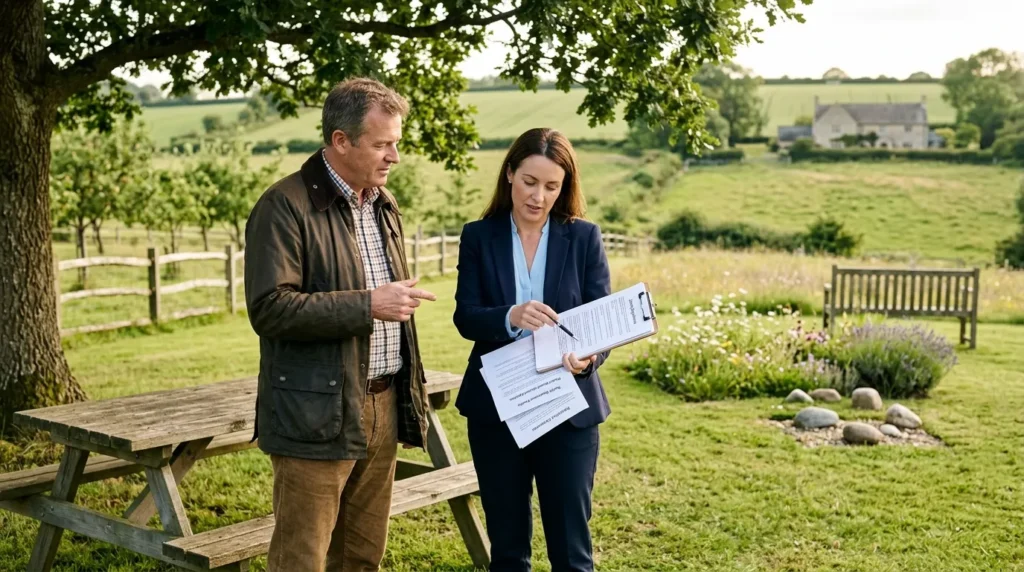
If the plan involves ashes rather than a body, most of the above falls away. The majority of states let you keep, bury, or scatter cremated remains on land you own with no permit, no setback, and no deed notation. A small number of states and many municipalities still regulate scattering, so confirm locally.
For families drawn to a home burial but wary of the paperwork, this middle path delivers most of what they want. It keeps someone close without permanently altering the title to the land.
The bottom line
So, can you bury someone on your property? In most of the United States, the answer is yes, provided you own the land, file the right permits, respect the setbacks, and put the burial on the record. The legal risk in a home burial sits in the details, and those details are set by your state and your county, not by any article.
Start with one phone call to your county registrar and one to your state health department, and get both answers in writing. Then bring in a local attorney to handle the deed language before the burial happens rather than after. An hour of professional advice now is cheaper than a title dispute your children inherit.
Frequently asked questions
Check your loan documents first. Nothing in federal law bars it, but some mortgages contain covenants prohibiting changes to the land’s use. Telling your lender afterward is worse than asking beforehand.
Most states set a minimum soil cover rather than a total depth, commonly between two and four feet over the container. Massachusetts guidance calls for at least 3 feet of soil above the body.
On private land, usually neither. Vault requirements are cemetery policies, not state law. A shroud or a simple wooden box is acceptable in most jurisdictions.
No. Every state that permits private burial ties it to ownership, because the record follows the title. Renters cannot encumber someone else’s land.
Your county registrar or local health department. They issue the burial transit permit, and they know the local setback rules better than any national guide can.
Often yes. Several states have a separate designation for a family burial ground, which can carry acreage minimums, registration requirements, and, in some places, its own property tax treatment.







