In today’s fast-paced digital world, images are more than just visuals; they are powerful tools for communication, marketing, and storytelling. Among all the image formats available, JPG meaning has become a household name, appearing everywhere from social media feeds to professional photography portfolios.
Whether you’ve seen files ending in .jpg or .jpeg, understanding JPG meaning reveals why this format is so popular: it delivers high-quality images in smaller file sizes, making it perfect for online sharing, web design, and digital storage without sacrificing visual appeal.
This comprehensive guide explains JPG meaning, how the format works, the compression technology behind it, and why it has become the most widely used image format online.
| Aspect | Details |
| JPG meaning | Photographs, realistic images, web graphics, social media, and digital photography |
| File Extensions | .jpg and .jpeg (identical and interchangeable) |
| Compression Type | Lossy compression – reduces file size while preserving visual quality |
| Color Support | 24-bit color, over 16 million colors |
| Best For | Developed in the late 1980s – early 1990s, released in 1992 by the Joint Photographic Experts Group |
| Advantages | Small file size, high compatibility, adjustable compression, quick upload/download |
| Limitations | Lossy compression (quality loss on repeated edits), no transparency, not ideal for sharp graphics, text, logos, or illustrations |
| Common Uses | Digital photography, social media, websites/blogs, email attachments, online advertising |
| Comparison with Other Formats | PNG: better for graphics and transparency; GIF: animations, 256 colors; WebP: smaller size, supports transparency, newer web format |
| History | Why is Widely Used Online |
| Why Widely Used Online | Balances image quality and file size, fast loading, broad compatibility, ideal for photographic content |
What Does JPG Meaning?

The term JPG meaning refers to the Joint Photographic Experts Group, the international committee that developed the widely used image compression standard. Files with the extensions .jpg or .jpeg are digital images compressed using the JPEG algorithm created by this group, allowing for smaller file sizes without significantly reducing visual quality.
The reason for the two extensions dates to older computer systems, especially early versions of Windows that only supported three-letter file extensions, so .jpeg was shortened to. Both formats are identical and fully interchangeable.
Key points about JPG extensions include that .jpg and .jpeg are the same format, both use the same compression technology, most devices and software support both versions, and the only difference lies in the file name length.
The History of the JPG Format
- The JPEG standard was developed in the late 1980s and early 1990s by the Joint Photographic Experts Group.
- Its main goal was to create an efficient method for compressing photographic images without significantly reducing visual quality.
- Before JPEG technology existed, digital images were extremely large, making them difficult to store on computers.
- Large image files were also slow and challenging to transfer over early internet networks.
- In 1992, the JPEG standard was officially released and quickly gained popularity.
- It soon became the preferred image format for several uses, including:
- Digital photography
- Online image sharing
- Website graphics
- Email attachments
- The JPG format revolutionized digital imaging by allowing high-quality images to be stored and transmitted much more efficiently.
How JPG Image Files Work
JPG image files use a compression algorithm that reduces file size while preserving most of the image’s visual quality, making the format especially effective for photographs that contain millions of colors and complex details. Instead of storing every pixel exactly as it appears, JPG compression analyzes the image and removes data that the human eye is less likely to notice, allowing the file to become much smaller while still looking nearly identical to the original.
This compression process involves several technical stages, including color space conversion, downsampling, Discrete Cosine Transform (DCT), quantization, and entropy encoding, all of which work together to reduce the amount of data required to represent the image efficiently.
Understanding JPG Compression Technology
- One of the most important features of JPG images is their lossy compression method.
- Lossy compression means that some image data is permanently removed to reduce the overall file size.
- The compression process is designed to minimize visible quality loss, so most people cannot easily notice the removed data.
How Lossy Compression Works?
- The algorithm identifies parts of the image with redundant or unnecessary information.
- Less important visual details are simplified or removed.
- The remaining image data is stored in a more efficient way.
- This process allows large photographs to shrink significantly in size while keeping acceptable visual quality.
Example of File Size Reduction
- A high-resolution image may start at:
- 20 MB (uncompressed)
- After JPG compression, the file size may become:
- 2–4 MB
- Despite this large reduction in size, the image can still appear almost identical to the original to the human eye.
Key Features of JPG Files
The popularity of JPG comes from several practical features that make it suitable for many digital uses, including photography, websites, and online media. Its ability to balance image quality with smaller file sizes is one of the main reasons it remains one of the most widely used image formats.
Excellent Compression Efficiency
JPG files are known for their strong compression capabilities. The format can significantly reduce image file size while still maintaining acceptable visual quality. Because of this efficiency, JPG images are ideal for websites, blogs, and digital platforms where faster loading speeds and smaller storage requirements are important.
Support for Millions of Colors
JPG images support 24-bit colors, which allows them to display more than 16 million colors. This wide color range makes JPG meaning especially relevant for photographs and realistic images, as it enables the format to handle complex color gradients and detailed visual elements with high accuracy.
Wide Compatibility
One of the biggest advantages of JPG files is their universal compatibility. Almost every device, operating system, and web browser can open and display JPG images without requiring special software.
Common platforms that support JPG include Windows, macOS, Linux, smartphones, web browsers, and most image editing programs, making the format highly accessible for users worldwide.
Adjustable Quality Settings
Another useful feature of JPG files is the ability to control compression levels when saving images. Users can choose higher compression to create smaller files, although this may slightly reduce image quality. On the other hand, lower compression preserves more visual detail but produces larger file sizes.
Why JPG Is Widely Used Online?
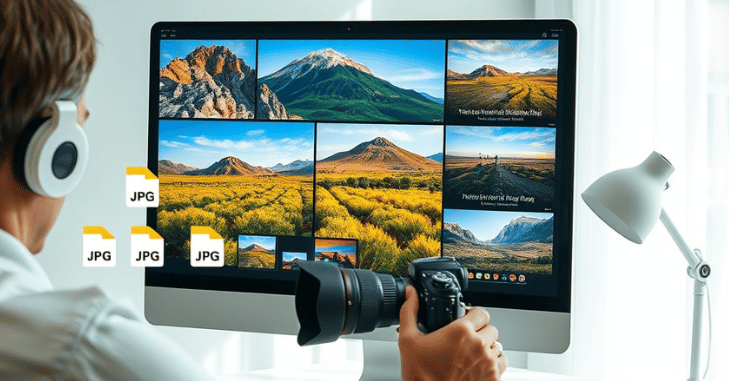
- The internet relies heavily on JPG images because they provide an excellent balance between image quality and file size.
- Websites need to load quickly, and large image files can significantly slow down page speed.
- JPG format helps solve this issue by compressing images efficiently while keeping them visually appealing.
Main Reasons JPG Is Popular Online
- Fast website loading times
- Smaller storage requirements
- Easy image sharing across platforms
- Broad compatibility with devices and browsers
- Ideal format for photographic content
- Because of these advantages, JPG remains one of the most commonly used image formats on the internet.
Common Uses of JPG Images
JPG images are widely used across many industries and digital platforms because they offer a strong balance between image quality and file size. Their flexibility and compatibility make them suitable for many everyday digital uses.
Digital Photography
Most digital cameras and smartphones save photos in JPG format by default. This is because JPG provides a good balance between high image quality and efficient storage, allowing users to store many photos without taking up too much device space.
Social Media Platforms
Many social media platforms automatically convert uploaded images into JPG format. Popular platforms such as Instagram, Facebook, and Twitter often optimize photos using JPG compression so that images load quickly and use less storage on their servers.
Websites and Blogs
Web designers and bloggers frequently use JPG images because they help websites load faster while still maintaining good visual quality. JPG files are commonly used for blog illustrations, product photos, hero banners, and background images, making them one of the most widely used image formats on websites.
Email Attachments
JPG images are also popular for email attachments. Since JPG files are usually smaller than many other image formats, they are easier and faster to send through email, especially when sharing photographs or visual documents.
Online Advertising
Digital marketing campaigns often use JPG images for different types of advertising materials. The format is commonly used in display ads, website banners, landing pages, and promotional graphics, helping businesses present visual content clearly while keeping page loading speeds fast.
Advantages of JPG Format
Key Benefits
- Small file sizes, which help save storage space
- High compatibility across devices and operating systems
- Excellent format for photographs and detailed images
- Quick upload and download speeds, especially for websites and online platforms
- Adjustable compression settings that allow users to balance quality and file size
- Because of these advantages, JPG is considered an ideal image format for everyday digital use.
Limitations of JPG Images
Lossy Compression
- JPG uses lossy compression, which means some image data is permanently removed.
- Each time a JPG image is edited and saved again, it can lose a small amount of quality.
- Repeated editing and saving may lead to visible compression artifacts or reduced clarity.
No Transparency Support
- JPG images do not support transparent backgrounds.
- Unlike formats such as PNG, JPG files always have a solid background.
Not Ideal for Graphics
- JPG is not suitable for images that require sharp edges or clear lines, such as:
- Sharp text
- Logos
- Line art
- Illustrations
JPG vs Other Image Formats
JPG
- Smaller file size, making it efficient for storage and web use
- Ideal for photographs with complex colors and gradients
- No transparency support
PNG
- Larger file size due to lossless compression
- Supports transparency, making it ideal for overlays and graphics
- Better suited for logos, illustrations, and images with sharp edges
JPG vs GIF
JPG
- Supports millions of colors, ideal for realistic photos
- Not suitable for animations
GIF
- Supports only 256 colors, which limits color depth
- Commonly used for animated images and simple graphics
JPG vs WebP
WebP
- Newer image format developed specifically for the web
- Often produces smaller file sizes than JPG while maintaining quality
- Supports transparency, making it versatile for web graphics
- Despite newer alternatives like WebP, JPG remains more widely supported across devices, software, and platforms, ensuring its continued popularity.
Tips for Optimizing JPG Images

- Use image compression tools
- Choose medium compression settings
- Resize images before uploading
- Avoid repeatedly editing and resaving JPG files
- Use modern optimization plugins for websites
Conclusion
Understanding JPG meaning provides valuable insight into why this image format has remained a cornerstone of digital media for decades. JPG, which stands for Joint Photographic Experts Group, combines efficient compression technology, support for millions of colors, and wide compatibility across devices and platforms.
These features make it ideal for photographs, websites, social media, and everyday image sharing. By balancing file size and visual quality, JPG enables faster uploads, easier storage, and smooth online sharing, ensuring that it continues to be one of the most reliable and widely used image formats in the digital world.
FAQs
Joint Photographic Experts Group is the name of the organization that developed the JPEG standard.
JPEG is better for photographs, quick-loading web images, and smaller file sizes; PNG is better for high-quality, transparent, or altered images.
Because of this, the majority of operating systems use PNG for screenshots. PS: It appears that Windows can now read HEIC files without any issues.
JPEGs are made to effectively hold high-quality digital images that are full of color and detail