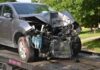
A fully loaded tractor-trailer can weigh 80,000 pounds. A midsize sedan weighs about 3,500. That ratio is why a highway impact that would leave two cars dented sends one person to a trauma center and the other home with a bent bumper. It is also why the trucking company does not wait for you to recover before it starts building its file.
Most large motor carriers keep a rapid-response protocol. An adjuster, and on serious crashes a reconstruction engineer, is often dispatched to the scene the same day, while the injured driver is still in triage. By the time an ordinary claimant thinks about paperwork, the carrier has already photographed the roadway, downloaded the engine control module, and interviewed its own driver with counsel present. The five mistakes below are the ones that most often turn a strong case into a cheap one, and each is avoidable. If the collision happened in Los Angeles County, one practical first step is to find a Beverly Hills truck accident lawyer at PrimeTime Law Group who works in Federal Motor Carrier Safety Administration territory rather than treating the case like a fender bender.
Mistake 1: Refusing transport and deciding to see how you feel tomorrow
Adrenaline is an effective and short-lived painkiller. People walk away from serious wrecks, decline the ambulance, and wake up two days later unable to turn their head or remember the drive home. The injuries that hide best are the expensive ones: subdural bleeding, splenic and liver lacerations, mild traumatic brain injury, and whiplash-associated disorder that only declares itself once the inflammatory response peaks.
The legal cost of waiting is separate from the medical one. An emergency department record created within hours of the crash is a contemporaneous document, written by a neutral clinician, that ties a mechanism of injury to a specific set of complaints. A first visit made eleven days later is a document an adjuster will argue was caused by something else. Defense medical reviewers are trained to chart two things above all: the delay before the first visit, and any gap of more than a few weeks in treatment afterward. Small entries in those early notes routinely swing the number, which is the point of How Small Medical Details Decide Big Rear-End Accident Settlements.
If you decline transport at the scene, go to an urgent care or emergency department the same day anyway, describe the collision in plain terms, and list every symptom including the vague ones. Headache, ringing ears, nausea, and difficulty concentrating belong in the chart even if they sound minor next to a fractured wrist.
Mistake 2: Giving a recorded statement to the carrier insurer
Your own policy contains a cooperation clause, so you generally must report the loss and answer your own insurer honestly. You owe nothing like that to the trucking company insurer. Its adjuster is not neutral, is often the first person to call, and is usually friendly, sympathetic, and recording.
Recorded-statement questions are engineered. Being asked whether you are feeling all right on day two produces a recording of you saying you are fine, which is then read back at mediation next to a surgical recommendation. Being asked how fast you were going invites a guess that becomes an admission. Being asked to describe the sequence invites you to fill gaps that a concussed brain genuinely does not have.
A short written notice of the claim satisfies every obligation you actually have. Provide your name, contact details, your own insurer and claim number, and the police report number, then decline the recorded interview and route further contact through counsel. Do not sign a blanket medical authorization either; a broad release lets the carrier pull a decade of unrelated records and hunt for a pre-existing explanation.
Mistake 3: Letting the electronic evidence disappear on schedule
Trucking cases are won on data that has a retention clock. The engine control module, commonly called the black box, stores last-stop and hard-brake records that can be overwritten by the next event or lost entirely if the tractor is repaired and returned to service. Under 49 CFR 395.8, a carrier must keep records of duty status and their supporting documents for six months, not forever. Post-crash drug and alcohol testing under 49 CFR 382.303 has to happen within eight hours for alcohol and thirty-two hours for controlled substances, and if the carrier misses that window the opportunity is simply gone.
The fix is a preservation letter, sent by counsel to the carrier and its insurer within days, putting them on notice that destruction of listed items will be treated as spoliation. Sending it early is what makes a court receptive to a sanction later.
What a preservation demand should name specifically
- Engine control module and event data recorder downloads, plus the vehicle itself in post-crash condition until inspection.
- Electronic logging device records and records of duty status for the driver, covering at least the preceding thirty days.
- Dispatch records, trip envelopes, fuel receipts, toll and GPS telematics data that show actual driving hours.
- Driver qualification file under 49 CFR 391.51, including the medical examiner certificate, motor vehicle record, and prior employer safety history.
- Maintenance and repair records, annual inspection reports, and driver vehicle inspection reports under 49 CFR 396.11 for the tractor and the trailer separately.
- Post-accident drug and alcohol testing results and chain of custody forms.
- The accident register required by 49 CFR 390.15, which lists the carrier other crashes.
- Any forward-facing or driver-facing camera footage, plus the retention policy that governs it.
Trailer records matter on their own because the trailer is frequently owned by a different company than the tractor. That is one of several reasons truck cases involve more defendants than car cases, and it is a reason not to let a quick settlement with the driver close the door on everyone else.
Mistake 4: Collecting the wrong details at the scene
Exchanging a licence and an insurance card is enough for a two-car collision. It is not enough here, because the entity that pays is usually not the person driving. If you are physically able, or if a passenger or bystander can help, capture the identifiers that let a lawyer find every responsible party.
- The USDOT number and MC number painted on the tractor door, which unlock the carrier federal safety record.
- The carrier legal name and any different name on the trailer, plus both unit numbers.
- Whether hazardous materials placards were displayed, and the four-digit UN number on them.
- The bill of lading or shipper name if the driver will show it, since brokers and shippers are sometimes defendants.
- The responding agency, the officer badge number, and the report or incident number.
- Names and mobile numbers of independent witnesses, not just their statements to police.
- Photographs of final rest positions, skid and gouge marks, debris fields, and the cargo load if it shifted.
- The tow yard name and address, because that is where the truck goes and where an inspection has to be arranged.
Mistake 5: Taking the first offer before you know what the case is worth
Early offers arrive precisely because the carrier knows more than you do. Interstate general freight carriers must carry at least 750,000 dollars in liability coverage under 49 CFR 387.9, and carriers hauling certain hazardous materials must carry five million, so the money available is usually far beyond a personal auto policy. An offer made in week three is being measured against a medical picture that is not finished.
Signing a release before you reach maximum medical improvement forecloses future surgery, future wage loss, and any life-care needs. It also does nothing about liens. Health insurers with subrogation rights, ERISA plans, hospital lien statutes, and Medicare conditional payments all attach to settlement money, and an unadvised claimant can settle for a figure that vanishes into repayment obligations.
| Issue | Typical car accident claim | Commercial truck claim |
|---|---|---|
| Governing rules | State vehicle code and common law negligence | State law plus 49 CFR Parts 382 to 399 |
| Likely defendants | The other driver and vehicle owner | Driver, motor carrier, trailer owner, broker, shipper, maintenance vendor |
| Minimum liability coverage | State minimums, often 25,000 to 50,000 dollars | 750,000 dollars for interstate general freight, up to 5 million for some hazmat |
| Key evidence | Police report, photographs, medical records | Engine control module, electronic logs, driver qualification file, maintenance records |
| Who investigates first | An adjuster in the following days | A rapid-response team, sometimes within hours |
| Realistic timeline | Several months | A year or more, with formal discovery and expert reconstruction |
Catastrophic injuries also spill outside the injury claim. Long hospitalizations disrupt parenting schedules, and families sometimes have to revisit a custody arrangement while recovery is ongoing, which is family court work of the kind the Law Office of Maria Lowry handles rather than something an injury firm resolves. Where a crash was fatal, the wrongful death claim usually cannot move until an estate is opened, so a bereaved family in Ontario may need a Wills and estates lawyer Mississauga residents can reach before the civil claim proceeds at all.
Frequently Asked Questions
How long do I have to file a truck accident lawsuit?
It depends entirely on the state, and the range is real: some states allow one year for personal injury, many allow two, and a few allow three or more. Claims against a government entity, such as a municipal refuse truck, often require a formal notice of claim within a few months, long before the ordinary deadline. Because the shortest applicable rule controls, get the specific deadline confirmed for your state early rather than assuming you have years.
Do I still have a claim if I was partly at fault?
Usually yes, though the rule varies. Pure comparative fault states reduce your recovery by your percentage of fault with no cutoff. Modified comparative fault states bar recovery once you cross 50 or 51 percent. A small number of jurisdictions still apply contributory negligence, where any fault at all can defeat the claim. Adjusters routinely assign claimants more fault than the evidence supports, which is one reason scene photographs matter.
Can I sue the trucking company or only the driver?
Both are commonly named. A carrier is vicariously liable for its driver acting within the scope of employment, and it can also be directly liable for negligent hiring, inadequate training, pressuring schedules that force hours-of-service violations, or failing to maintain the equipment. Federal leasing rules also make a carrier responsible for owner-operators running under its authority, so the paint on the door often matters more than the name on the title.
What are hours-of-service limits and why do they matter?
Property-carrying drivers are generally limited to eleven hours of driving within a fourteen-hour on-duty window after ten consecutive hours off, with a thirty-minute break required after eight cumulative driving hours, plus weekly limits of sixty or seventy hours. Electronic logging devices record it. When the logs contradict fuel receipts, tolls, or delivery times, a fatigue case stops being speculation and becomes documented.
Should I talk to my own insurer?
Yes. Report the loss promptly, because your policy requires cooperation and because your own uninsured or underinsured motorist coverage, medical payments coverage, or personal injury protection may pay bills while liability is fought over. Be accurate and brief, stick to facts you actually remember, and tell your insurer that the other side has asked for a recorded statement.
What to Do Next
If you do one thing this week, get a preservation letter into the carrier hands. Everything else in a truck case can be reconstructed later. Engine data, duty logs, and camera footage cannot be, and the retention windows are measured in weeks and months rather than years. Book the medical evaluation, decline the recorded statement, and put the request for evidence in writing before the tractor is repaired and back on the road. More background reading on collision claims is collected under Accident Law.
This article is general information about the claims process, not legal advice, and the rules that apply to your case depend on where the crash happened.