Global Standards for Legal and Immigration Services
Navigating the landscape of permanent residency requires a deep understanding of global standards for legal and immigration services. Each country, while sharing common objectives of attracting talent and fostering family reunification, operates within its own unique international law framework and regulatory systems. This complexity necessitates a meticulous due diligence process for every applicant.
Understanding visa categories and their specific requirements is paramount. For instance, a temporary work visa might have different eligibility criteria than a permanent skilled worker visa. Residency obligations, such as minimum physical presence requirements, are also critical for maintaining status and eventually pursuing citizenship. These jurisdictional requirements vary significantly, from the number of days one must reside in a country to the types of economic or social contributions expected.
Professional consultation becomes indispensable in this context. Immigration law is dynamic, with policies and regulations frequently updated. Expert guidance ensures that applications are compliant, complete, and strategically positioned for success. This includes meticulous application management, from the initial eligibility assessment to the final submission of documents. A comprehensive understanding of these global standards is the foundation for successful permanent residency applications, ensuring that individuals and businesses alike can confidently pursue their international goals.
North American Pathways: Canada and the United States
North America presents diverse and robust pathways to permanent residency, primarily through Canada’s Express Entry system and Provincial Nominee Programs, and the United States’ employment-based green card categories. Both nations have sophisticated immigration systems designed to attract skilled workers, entrepreneurs, and families, yet their mechanisms and requirements differ significantly. Understanding these distinctions is key for anyone considering permanent residency in either country.
In Canada, the Express Entry system serves as the primary application management system for several economic immigration programs, including the Federal Skilled Worker Program, the Federal Skilled Trades Program, and the Canadian Experience Class. This points-based system, known as the Comprehensive Ranking System (CRS), evaluates candidates based on factors like age, education, language proficiency, and work experience. Complementing Express Entry are the Provincial Nominee Programs (PNPs), which allow individual provinces and territories to nominate candidates who meet their specific labor market needs. Family Sponsorship programs also provide avenues for Canadian citizens and permanent residents to bring eligible relatives to Canada.
The United States, on the other hand, offers a range of employment-based (EB) green card categories. These include the EB-1 categories for individuals with extraordinary ability, outstanding professors/researchers, and multinational managers/executives; the EB-2 category for professionals with advanced degrees or exceptional ability, often including a National Interest Waiver option; and the EB-3 category for skilled workers, professionals, and other workers, typically requiring a labor certification. The process often involves a choice between Adjustment of Status (for those already in the U.S.) and Consular Processing (for those applying from abroad). Applicants must also navigate the Visa Bulletin, which indicates priority dates and visa availability, especially for categories subject to annual caps and per-country limits.
The Canadian Express Entry and PNP Framework
Canada’s approach to economic immigration is largely driven by the Express Entry system, which streamlines the application process for skilled workers. Candidates create an online profile and, based on their qualifications, receive a CRS score. Factors such as age, education, language proficiency (English and/or French), work experience, and connections to Canada (e.g., a provincial nomination or a valid job offer) contribute to this score. Higher CRS scores increase the likelihood of receiving an Invitation to Apply (ITA) for permanent residency.
The Federal Skilled Worker Program, a key component of Express Entry, requires applicants to meet minimum thresholds for work experience, language ability, and education. The Canadian Experience Class is tailored for individuals with at least one year of full-time Canadian work experience, while the Federal Skilled Trades Program caters to those with qualifications in specific skilled trades.
Provincial Nominee Programs (PNPs) play a crucial role by allowing provinces to nominate individuals who meet their unique economic and demographic needs. Many PNPs are aligned with Express Entry, meaning a provincial nomination can significantly boost a candidate’s CRS score and virtually guarantee an ITA. Other PNPs operate outside Express Entry, offering pathways for specific occupations, international graduates, or entrepreneurs. This decentralized approach ensures that immigration benefits all regions of Canada, addresses specific labor-market needs, and fosters local economic growth.
U.S. Employment-Based Residency and Compliance
For those seeking permanent residency in the United States through employment, the process involves navigating distinct categories and compliance requirements. The EB-1 category is reserved for individuals at the pinnacle of their fields, including those with extraordinary ability in arts, sciences, education, business, or athletics (EB-1A), outstanding professors and researchers (EB-1B), and multinational managers or executives (EB-1C). EB-1A and EB-1B often do not require a labor certification, and EB-1A allows for self-sponsorship, making it a highly sought-after but challenging path.
The EB-2 category is for professionals holding advanced degrees or individuals with exceptional ability. While typically requiring a labor certification, the National Interest Waiver (NIW) subcategory allows applicants to bypass this requirement if their work is deemed in the U.S. national interest. The EB-3 category is for skilled workers, professionals, and other workers, and generally requires a labor certification process to demonstrate that no qualified U.S. workers are available for the position.
A critical step for most employment-based green card applications is the employer’s (or the individual’s, in self-sponsored cases) filing of Form I-140, Immigrant Petition for Alien Worker. Once the I-140 is approved and a visa number is available, the applicant can either file Form I-485, Application to Register Permanent Residence or Adjust Status (if in the U.S.), or proceed with Consular Processing abroad.
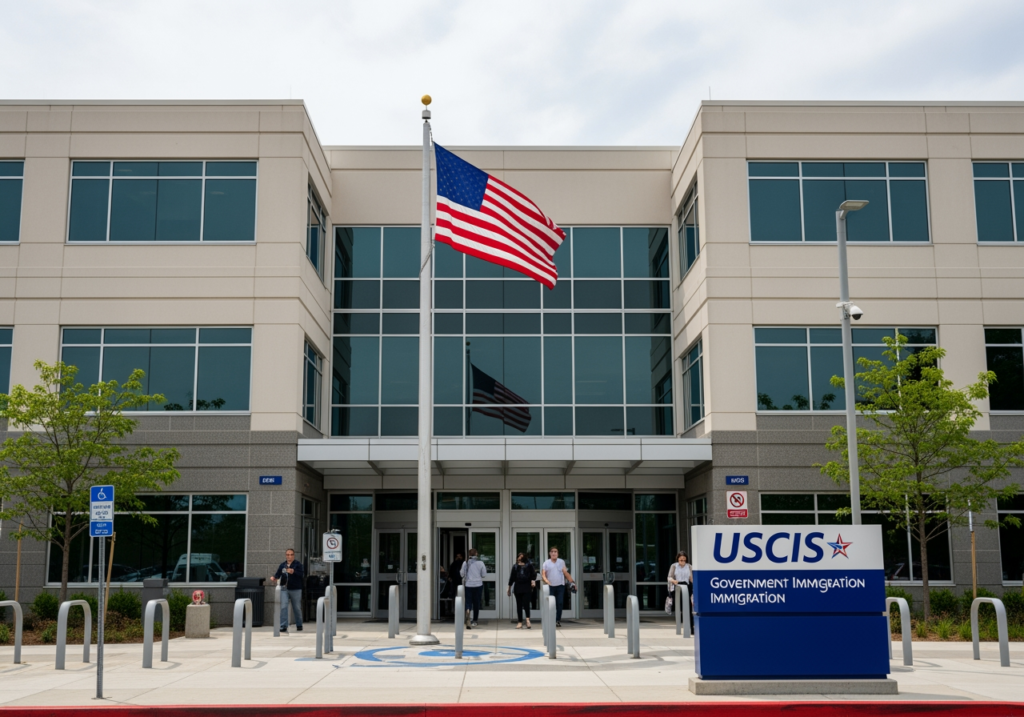
Compliance is rigorously enforced, particularly concerning the public charge rule, which assesses whether an applicant is likely to become primarily dependent on government assistance. Additionally, recent discussions have highlighted the importance of alien registration requirements, which mandate certain non-citizens to register with USCIS, emphasizing the need for comprehensive legal advice to avoid severe penalties.
European and Oceanic Residency Models
Beyond North America, countries in Europe and Oceania offer distinct models of permanent residency, each with specific requirements tailored to its national context. Finland and New Zealand provide excellent examples of these varied approaches, emphasizing factors like continuous residence, commitment to the country, and character.
In Finland, obtaining a permanent residence permit (P-permit) requires holding a continuous residence permit (A-permit) for a specified period. The key requirement is a continuous period of residence in Finland, typically meaning one must have held an A-permit for four years without any gaps. Furthermore, applicants must have resided in Finland for at least 2 of the past 4 years. Absences for ordinary holidays or work abroad on secondment by a Finnish employer usually do not interrupt this continuous residence. The grounds for the A-permit, such as employment, family ties, or entrepreneurship, must remain valid or transition to new valid grounds during this period. Permanent residence permits are not granted for studies or for merely looking for work; individuals in these categories must establish grounds for another type of continuous residence permit. Applications must also be submitted while the applicant is physically present in Finland and legally residing there.
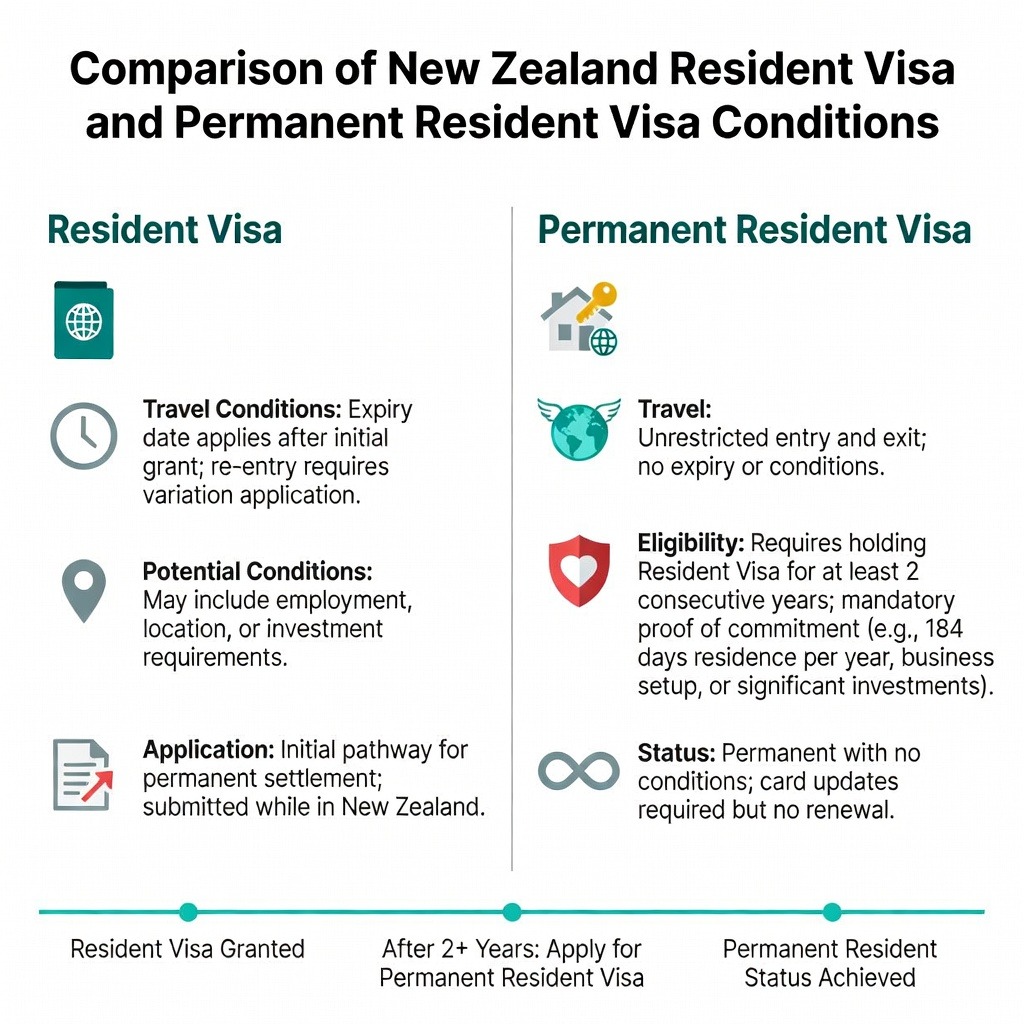
New Zealand’s system differentiates between a Resident Visa and a Permanent Resident Visa, with distinct implications for travel and long-term status. A Resident Visa allows an individual to live and work in New Zealand permanently, but comes with travel conditions, meaning there’s an expiry date after which one cannot re-enter New Zealand on that visa. To gain unrestricted travel rights, individuals must apply for a Permanent Resident Visa. Eligibility for a Permanent Resident Visa typically requires holding a Resident Visa for at least 2 consecutive years. During this time, applicants must demonstrate a commitment to New Zealand. This commitment can be shown in several ways, such as spending a certain number of days in the country (e.g., at least 184 days in each of the last two years), establishing a business, or having significant investments. All applicants, including family members, must also meet stringent character requirements, often involving police certificates, and must have met all conditions of their initial Resident Visa.
Feature New Zealand Resident Visa New Zealand Permanent Resident Visa Right to Live/Work Yes, permanently Yes, permanently Travel Conditions Yes, travel expiry date applies (must apply for variation) No, unrestricted travel in and out of New Zealand Eligibility Initial pathway to permanent settlement Requires holding a Resident Visa for at least 2 years Commitment Proof Not explicitly required for initial grant Mandatory: must demonstrate commitment to New Zealand Conditions May have conditions related to employment, location, etc. No conditions Application Timing Initial application for permanent settlement Applied for after fulfilling Resident Visa obligations Renewability Travel conditions can be extended Does not expire, no need for renewal (card needs updating)
Strategic Considerations for Permanent Residency Legal Services
The journey to permanent residency is multifaceted, involving a careful assessment of individual circumstances against complex legal frameworks. Strategic planning is crucial, particularly when dealing with potential obstacles such as inadmissibility grounds. These grounds can include issues related to criminality, health reasons (e.g., a condition that might pose an excessive demand on health or social services), financial reasons, or misrepresentation on previous applications. Understanding how to address these, potentially through waivers or specific public policies, is a key aspect of effective legal counsel.
Comprehensive medical examinations are a standard requirement for most permanent residency applications worldwide. These exams ensure applicants do not pose a public health risk and do not place an undue burden on the healthcare system. Similarly, proof of funds is often required to demonstrate an applicant’s ability to support themselves and their family upon arrival, preventing them from becoming a public charge. Language proficiency, typically assessed through standardized tests, is another common criterion, especially for skilled worker programs.
For individuals with past legal issues, understanding criminality waivers and their eligibility is vital. The accuracy of documentation is paramount; any discrepancies or omissions can lead to delays or even refusal. Biometric appointments, involving fingerprints and photographs, are a routine part of the application process for security and identification purposes.
Given these complexities, securing specialized legal assistance is not just beneficial but often essential. Navigating these intricate legal landscapes often requires specialized knowledge, and understanding where to find reliable permanent residency legal services is key to avoiding common pitfalls. Legal professionals can provide invaluable guidance, ensuring all requirements are met, potential issues are proactively addressed, and applications are submitted accurately and efficiently. For instance, maintaining permanent residency status in Canada requires residents to live in the country for at least 730 days within any five-year period, a detail that must be strategically managed.
Conclusion
The journey to permanent residency, whether for individuals or businesses, is a significant undertaking that demands strategic planning, meticulous attention to detail, and a thorough understanding of diverse legal frameworks. From navigating Canada’s Express Entry and Provincial Nominee Programs to understanding the nuances of U.S. employment-based green cards, or fulfilling the continuous residence requirements in Finland and demonstrating commitment in New Zealand, each path presents its unique set of challenges and opportunities.
Our extensive guide aims to demystify these complex processes by highlighting the critical eligibility criteria, application pathways, and strategic considerations. We emphasize that achieving long-term settlement and legal compliance in a new country is not merely about fulfilling basic requirements but about crafting a compelling case that aligns with the host nation’s immigration objectives.
In an era of increasing global migration, the importance of pathway selection and professional guidance cannot be overstated. Engaging with experienced legal and immigration services ensures that applicants are well-prepared, their documentation is accurate, and their applications are strategically positioned for success. By understanding the global standards and specific requirements for permanent residency, individuals and businesses can confidently embark on their journey to build a new life and contribute to their chosen nation.
Apart from that, if you want to know more about Scroggins Law Group in Texas: A 2026 Firm Profile and Review then visit our Business Law category.
Frequently Asked Questions about Legal and Immigration Services
We often encounter common questions from individuals and businesses seeking to understand the intricacies of permanent residency. Here, we address some of the most frequent inquiries to provide clarity and guidance.
For skilled workers, core legal and immigration services typically encompass a comprehensive assessment of their qualifications against the criteria of various immigration programs. This includes evaluating educational credentials through an Educational Credential Assessment (ECA), verifying work experience against National Occupational Classification (NOC) codes or equivalent systems, and ensuring language proficiency meets the required standards through recognized language tests. Our services guide applicants through selecting the most suitable skilled worker pathways, preparing all necessary documentation, and meticulously submitting their applications to the relevant immigration authorities. This strategic support aims to maximize their chances of success in highly competitive immigration streams.
Our legal and immigration services provide extensive support for the Canadian Express Entry system. This begins with assisting clients in creating a robust Express Entry profile, ensuring all information is accurately represented to maximize their Comprehensive Ranking System (CRS) score. We provide guidance on optimizing this score, including factors such as further education, additional language testing, and gaining Canadian work experience. We help compile comprehensive document checklists, including securing police certificates from all countries of residence. Upon receiving an Invitation to Apply (ITA), we meticulously prepare and submit the full permanent residency application within the strict deadlines, managing all post-invitation processing to ensure a smooth transition to permanent resident status.
In New Zealand, the distinction between a Resident Visa and a Permanent Resident Visa is crucial, primarily concerning travel restrictions and the permanence of one’s stay. A Resident Visa grants an individual the right to live and work in New Zealand indefinitely, but it comes with travel conditions, meaning the holder cannot re-enter New Zealand on that visa after the expiry date without applying for a variation. To overcome these travel restrictions and gain truly indefinite re-entry rights, one must apply for a Permanent Resident Visa. Eligibility for this typically requires having held a Resident Visa for at least 2 consecutive years and demonstrating a genuine commitment to New Zealand through criteria such as physical presence, investments, or business establishment. We also provide guidance on specific exceptions for non-principal applicants who may have different timing considerations than the principal applicant.