


The Fundamentals of Legal and Insurance Protection
Life is full of unexpected events. A sudden legal dispute can be one of the most stressful. It can also be very expensive. We understand how quickly legal fees and court costs can add up. This can threaten our financial stability and peace of mind.
That is why legal and insurance protection is so vital. It offers a shield against these unforeseen challenges. This extensive guide will explore the various strategies available. We will look at how they safeguard our future. We will also examine how they ensure we have access to justice when we need it most. This includes protection for all kinds of situations, from everyday contractual disagreements to serious personal injury claims, such as those involving Appendicitis misdiagnosis legal protection. Our goal is to empower you. We want you to make informed decisions about protecting your interests.
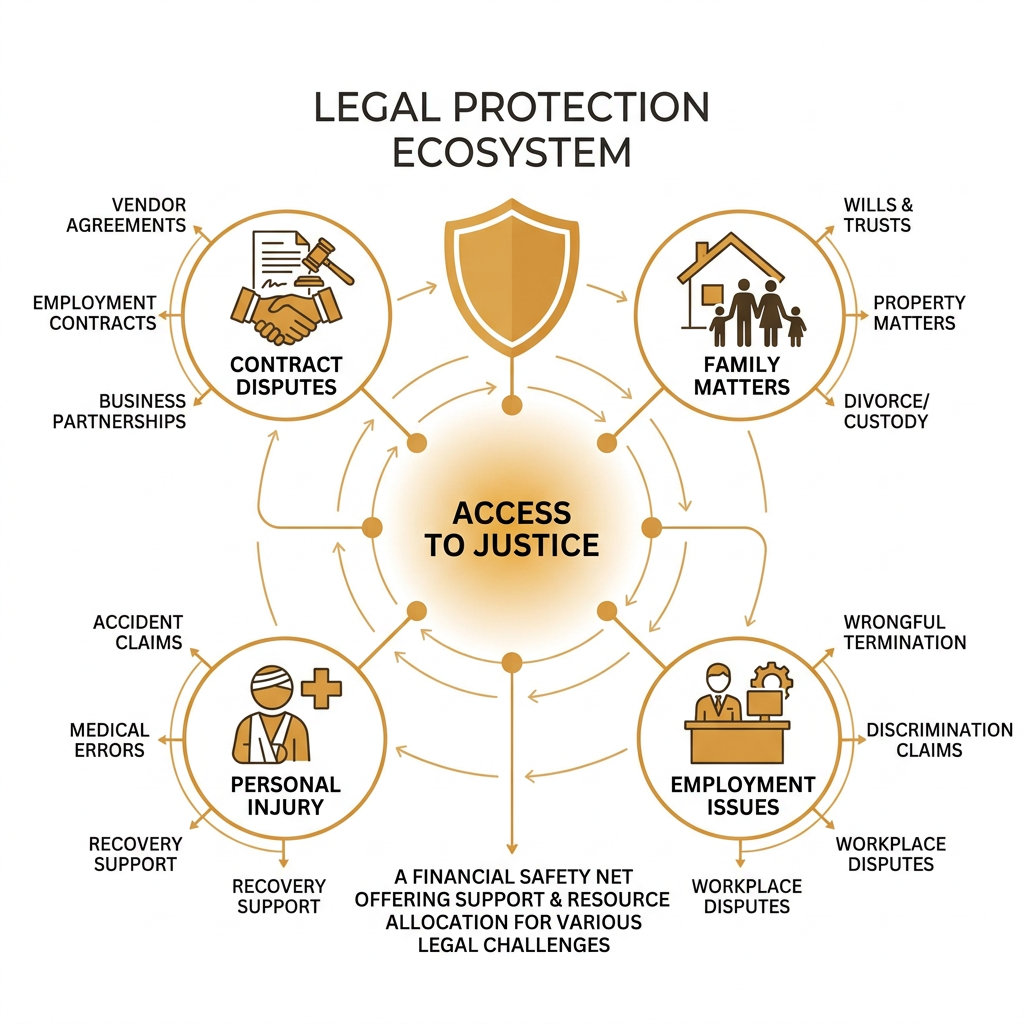
Navigating the complexities of the legal system can be daunting, both emotionally and financially. Legal and insurance protection, often referred to as Legal Expenses Insurance (LEI) or Legal Protection Insurance (LPI), is designed to alleviate these burdens. It acts as a financial safety net, covering the costs associated with legal disputes that might otherwise be prohibitive. This type of insurance ensures that individuals, families, and businesses can pursue or defend their legal rights without facing overwhelming expenses.
Unlike general liability insurance, which primarily protects you from claims made by third parties for damages you may have caused, legal protection insurance focuses on covering your own legal costs when you are involved in a dispute. This distinction is crucial. Liability insurance steps in when you are sued for negligence or harm to others, whereas legal protection insurance covers your expenses when you need to initiate legal action or defend yourself in a wide array of civil matters.
Consider the potential costs involved in a legal dispute: attorney fees, which can quickly accumulate based on hourly rates; court costs, including filing fees and administrative charges; and the expenses for expert witnesses, whose testimonies are often critical in complex cases. Even out-of-court settlements, while avoiding a full trial, still incur significant legal fees for negotiation and documentation. Without adequate protection, these costs can place immense strain on personal or business finances.
Feature Legal Protection Insurance (LPI) Liability Insurance Primary Purpose Covers your legal costs for pursuing or defending claims. Covers costs of damages you cause to third parties. Who it Protects The policyholder (individual, family, or business). Third parties injured or damaged by the policyholder. Trigger Event Involvement in a legal dispute (as plaintiff or defendant). Policyholder’s negligence causing harm to another. Costs Covered Legal fees, court costs, expert witness fees, disbursements. Damages, medical bills, property repair for third parties. Exclusions (Common) Intentional acts, pre-existing disputes, certain criminal cases. Intentional damage, contractual liabilities, criminal acts. Defining Legal Expenses Insurance (LEI)
Legal Expenses Insurance (LEI) is a specialized class of insurance that provides access to legal advice and covers the costs associated with a legal dispute. This can include a broad spectrum of legal issues, from employment disputes and property conflicts to contractual disagreements and personal injury claims. LEI is generally categorized into two main types: Before-the-Event (BTE) and After-the-Event (ATE).
Before-the-Event (BTE) insurance is purchased in advance, before any legal dispute has arisen. It is typically an add-on to existing policies such as home, motor, or commercial insurance, though standalone policies exist. BTE covers future, unforeseen legal issues, providing peace of mind that if a dispute occurs, the financial burden of legal representation will be managed. For instance, if you face an unexpected dispute with a landlord, employer, or a party to a contract, your BTE policy would cover the associated legal expenses.
After-the-Event (ATE) insurance, by contrast, is purchased after a legal dispute has already arisen but before legal proceedings commence. It is commonly used in personal injury cases or clinical negligence claims, particularly in jurisdictions with “no-win-no-fee” arrangements. ATE insurance covers the policyholder’s own legal costs and, crucially, the opponent’s legal costs if the case is lost. This type of insurance is often contingent on the case having a reasonable prospect of success, typically assessed at 51% or higher.
The regulatory framework for LEI, particularly in Europe, is robust. The Solvency II Directive, for example, sets out specific rules for the operation of legal expenses insurance, ensuring consumer protection and financial stability within the industry. These regulations often mandate that policyholders have the freedom to choose their own legal representation, rather than being restricted to the insurer’s panel of lawyers, especially in cases where a conflict of interest might arise.
The core benefit of LEI is its provision of professional legal advice and financial coverage. It democratizes access to justice, ensuring that individuals and businesses are not deterred from pursuing their rights due to the prohibitive cost of legal services. Understanding the nuances between BTE and ATE, and how they are regulated, is key to selecting the appropriate protection for your circumstances. The global liability insurance market, which includes components of legal risk, was valued over $25 billion in 2021 and is projected to reach $433 billion by 2031, reflecting the growing awareness and need for such protections. For a deeper dive into these market dynamics, you might find insights on Global liability market trends particularly informative.
The Role of Legal and Insurance Protection in Modern Society
In today’s and litigious world, the role of legal and insurance protection has never been more critical. It underpins financial security for individuals and businesses, acting as a crucial buffer against unexpected legal challenges. Many households operate on thin margins; for example, statistics show that the average UK household is just 19 days from the breadline, and a significant percentage have less than £1,000 in savings. Such financial precarity means that even a minor legal dispute, with its associated costs, could be catastrophic.
The complexity of modern litigation further underscores this need. Legal processes can be intricate, time-consuming, and require specialized knowledge that most people do not possess. From understanding nuanced contract terms to navigating court procedures, the legal landscape is fraught with potential pitfalls for the uninitiated. Legal protection insurance simplifies this by providing access to expert legal advice and covering the costs, allowing policyholders to focus on their lives or businesses rather than being overwhelmed by legal jargon and expenses.
Beyond individual cases, legal and insurance protection plays a vital role in upholding consumer rights and promoting fair dispute resolution. Without it, many individuals would be unable to challenge unfair practices by corporations, landlords, or employers. It empowers people to seek justice, ensuring that financial barriers do not prevent them from asserting their rights. This contributes to a more equitable society where legal recourse is accessible to all, not just those with deep pockets. The prevalence of legal disputes is high; a 2017 Ipsos survey revealed that over a quarter of respondents in Germany, France, Ireland, and the Netherlands had experienced a legal dispute in the preceding five years, highlighting that these issues are a common part of modern life.
Strategic Differences: Before-the-Event (BTE) vs. After-the-Event (ATE)
Understanding the fundamental differences between Before-the-Event (BTE) and After-the-Event (ATE) legal protection insurance is paramount for making an informed decision about your coverage. While both aim to mitigate the financial risk of legal disputes, they operate on distinct principles and are designed for different scenarios.
BTE insurance is proactive. It is purchased before any legal issue arises, often as an optional add-on to existing insurance policies like home, motor, or business liability. Its purpose is to provide coverage for future, unforeseen disputes. Think of it as a preventative measure, ensuring that should you suddenly find yourself needing legal advice or representation for an employment dispute, a property boundary issue, or a consumer rights claim, your policy is already in place to cover the costs. The benefit of BTE is its broad coverage for various potential disputes, offering peace of mind for the unexpected.
ATE insurance, on the other hand, is reactive. It is purchased after a specific legal dispute has already materialized, but typically before formal legal proceedings have begun. This type of insurance is particularly prevalent in personal injury and clinical negligence claims, especially in legal systems that permit “no-win-no-fee” arrangements. In such scenarios, ATE insurance serves a critical function: it covers the policyholder’s own legal disbursements (such as expert reports and court fees) and, crucially, the opponent’s legal costs if the case is ultimately lost. This protects claimants from the financial risk of an adverse costs order, which could otherwise be devastating. The insurer will assess the likelihood of success before offering an ATE policy, often requiring a prospect of success of 51% or higher.

The choice between BTE and ATE depends heavily on your current situation and risk profile. BTE is ideal for those who wish to have general legal protection in place for any future event, integrating it into their broader risk management strategy. ATE is specific to an existing dispute, providing targeted protection for litigation that is already underway. Both forms of insurance are designed to make legal processes more accessible and less financially burdensome, protecting your interests whether you’re planning ahead or reacting to an immediate challenge. For those considering long-term planning for legal eventualities, including safeguarding assets and family interests, exploring options related to Estate protection law can provide valuable context on how legal foresight can secure your future.
Historical Context and Global Prevalence
The concept of legal protection insurance is not new; its origins can be traced back to the early 20th century. The first forms of legal expenses insurance emerged in France in 1911, initially offered by automobile clubs to provide legal defense for their members against traffic fines and accident-related disputes. This innovative approach quickly gained traction, recognizing the common legal challenges faced by motorists.
Germany played a pivotal role in the development and popularization of LEI. In 1928, Deutsche Automobil Schutz (D.A.S.) expanded its offerings beyond motor-related issues to cover a broader range of public legal disputes, laying the groundwork for the comprehensive legal protection insurance we see today. This early adoption and expansion led to Germany becoming a dominant force in the global LEI market. Today, Germany accounts for a significant portion of the worldwide LEI market share, often cited as around 36% to 43% of the European market, which itself represents over 80% of the global market. Other European countries, such as France (12-14% of the European market) and the Netherlands (8%), also have well-established LEI markets.
The global prevalence of legal protection insurance, particularly in Europe, highlights its perceived value and necessity. European Union directives, such as Solvency II, specifically regulate LEI, ensuring consistency and consumer protection across member states. This strong regulatory environment has fostered a mature market where LEI is widely understood and utilized.
In contrast, the market for legal protection in the United States has evolved differently. While some forms of legal assistance plans exist, often referred to as “pre-paid legal services,” true legal expenses insurance as understood in Europe is less common. These pre-paid plans typically offer access to a network of attorneys for basic services at discounted rates or for a flat monthly fee, rather than covering the full costs of litigation like European LEI. This difference in market structure reflects varying legal traditions, litigation costs, and regulatory approaches.
Despite these regional variations, the underlying principle remains the same: to improve access to law and justice by mitigating the financial barriers associated with legal disputes. Countries like Japan and Canada have also seen growth in their LEI markets, with Japan’s gross written premium reaching 600 million euros in 2016 and Canada’s nearly doubling to 56 million CAD in the same year. This global trend underscores a growing recognition of the importance of proactive legal risk management for individuals and businesses alike.
Core Coverage Areas and Policy Limits
Legal protection insurance policies are designed to cover a diverse range of legal disputes, providing a financial safety net for various aspects of daily life and business operations. Understanding these core coverage areas and how policy limits function is essential for selecting the right protection.
Common personal coverage areas often include:
- Employment Disputes: Issues arising between an employee and employer, such as unfair dismissal, discrimination claims, or disputes over contracts.
- Rental Conflicts: Legal disagreements between tenants and landlords, covering issues like deposit disputes, eviction proceedings, or property damage claims.
- Traffic Matters: Legal defense for traffic offenses, disputes following road accidents, or issues related to vehicle ownership.
- Private Contract Disputes: Disagreements arising from contracts with service providers, retailers, or other individuals.
- Consumer Disputes: Claims related to faulty goods or services, breach of warranty, or other consumer rights issues.
For businesses, legal protection insurance extends to cover areas such as:
- Commercial Contract Disputes: Disagreements with suppliers, clients, or partners.
- Employment Law: Protection against claims from employees, including unfair dismissal, harassment, or wage disputes.
- Property Disputes: Issues related to business premises, such as lease disagreements or property damage.
- Tax Investigations: Coverage for legal and accountancy fees incurred during a tax investigation.
- Cyber Protection: An increasingly important add-on, covering legal costs associated with data breaches, cyber extortion, or online reputational damage. This is particularly relevant in an age where internet activities create new dispute opportunities from malicious actors.
Many policies offer optional extensions to tailor coverage to specific risks. For example, if you are particularly worried about rental disputes, you might add a “Home and Rental Legal Protection” extension. Similarly, businesses might opt for specific cyber protection or coverage for regulatory compliance issues. The ability to customize policies ensures that you receive protection where you need it most. When seeking comprehensive protection, it’s beneficial to explore various providers who offer Tailored legal insurance solutions that can be adapted to your unique circumstances, whether personal or business-related.
Determining the Right Coverage Limits for Legal and Insurance Protection
Choosing the appropriate coverage limits for your legal protection insurance is a critical decision that directly impacts the extent of your financial security during a legal dispute. The “limit of indemnity” refers to the maximum amount the insurer will pay out for legal costs in relation to a claim or a series of claims arising from the same event or cause. These limits can vary significantly, with common options ranging from £100,000 to £500,000, and some providers like ARAG offering up to £500,000 for legal costs.
To determine the right limit, consider potential “worst-case scenarios.” Legal disputes can be incredibly expensive, encompassing not only solicitor and barrister fees but also court costs, expert witness fees, and other disbursements. If you were to face a complex or protracted dispute, the costs could quickly escalate. For instance, a contractual dispute over a commercial tenancy could involve substantial legal bills, accountant fees for financial analysis, and significant court costs. Your chosen limit should ideally be high enough to cover these potential total costs, providing adequate protection without leaving you exposed to out-of-pocket expenses.
Several factors influence the level of legal protection you might need:
- Size of your business or complexity of your personal affairs: Larger businesses or individuals with more complex financial or property holdings may face more intricate and costly legal challenges.
- Nature of your work or lifestyle: Certain professions or activities carry higher risks of legal disputes. For example, a business operating in a highly regulated industry or an individual with extensive rental properties might require higher limits.
- Clients you service or interactions you have: Businesses dealing with numerous clients or high-value contracts might face a greater likelihood of disputes. Similarly, individuals with frequent contractual interactions might need more robust protection.
When assessing your needs, it’s advisable to think beyond just the immediate legal fees. Consider the potential for appeals, the involvement of multiple expert witnesses, and the duration of the dispute. While a higher limit means a higher premium, the cost of being underinsured in a serious legal battle can far outweigh the savings on premiums. It’s a strategic investment in protecting your financial future and ensuring access to justice when it matters most.
Navigating Exclusions and the Claims Process
While legal protection insurance offers a broad shield against legal expenses, it’s crucial to understand that policies come with specific exclusions and limitations. These are designed to define the boundaries of coverage and prevent misuse. Familiarizing yourself with these terms before a dispute arises can save you significant frustration and potential financial exposure.
Common exclusions typically include:
- Intentional Acts and Criminal Defense: Most policies will not cover legal costs arising from intentional criminal acts committed by the policyholder. While some may offer defense for minor traffic offenses, serious criminal charges are generally excluded.
- Pre-existing Disputes: Legal protection insurance is designed for unforeseen events. If a dispute already exists or was reasonably foreseeable before the policy was purchased, it will likely be excluded.
- Speculative Claims: Insurers usually require a reasonable “prospect of success” for a claim to be covered, often set at 51% or higher. If your legal counsel advises that your case has a low chance of winning, the insurer may decline coverage.
- Contractual Liabilities (if not specified): While LPI covers many contract disputes, some policies might exclude specific types of commercial contractual liabilities unless explicitly added as an extension.
- Fines and Penalties: Legal protection insurance typically covers the costs of legal representation, not the actual fines, penalties, or damages awarded against you in a court case.
- Disputes with the Insurer: In most cases, a legal protection policy cannot be used to pursue a claim against the very insurer providing the policy, especially if it relates to a dispute over the policy itself.
The claims process for legal protection insurance generally begins with notifying your insurer as soon as a potential legal issue arises. They will then assess the claim based on your policy terms. This assessment often involves:
- Initial Consultation: The insurer may provide access to a legal helpline or an initial consultation with a lawyer to determine the nature of the dispute and whether it falls within policy coverage.
- Prospect of Success Assessment: For cases that proceed beyond initial advice, the insurer will usually require an independent legal opinion on the merits of your case. If the “51% rule” (or similar threshold) is not met, coverage may be denied.
- Appointment of Legal Counsel: If the claim is accepted, you may have the right to choose your own lawyer, especially in cases where there’s a conflict of interest with the insurer’s preferred panel. Otherwise, the insurer will appoint a suitable legal professional.
- Management and Monitoring: The insurer will monitor the progress of the case and cover approved legal costs up to the policy limit.
Understanding these exclusions and the claims process is vital. It empowers you to manage your expectations and ensures you can leverage your legal protection effectively when a genuine, covered dispute arises.
The Duty to Defend and Settlement Mechanics
In the realm of legal and insurance protection, particularly concerning liability insurance (which often integrates with legal defense aspects), the “duty to defend” is a cornerstone principle. This duty obligates an insurer to provide legal counsel and cover the costs of defending the policyholder against a lawsuit, even if the allegations are ultimately proven false. It’s a broader duty than the “duty to indemnify,” which only requires the insurer to pay damages if the policyholder is found liable. The duty to defend is typically triggered if there’s even a potential for coverage based on the allegations in the complaint.
However, when it comes to legal protection insurance (LEI), the duty to defend takes on a slightly different nuance, focusing on the policyholder’s right to pursue or defend their own claims. Key aspects of this include:
- Choice of Lawyer: A significant benefit of LEI, especially in Europe, is the policyholder’s right to choose their own lawyer once legal proceedings are initiated or if a conflict of interest arises. This ensures independent representation, rather than being limited to the insurer’s in-house or panel lawyers. The insurer must inform the policyholder of this right.
- Conflict of Interest: Situations can arise where the insurer has a conflict of interest (e.g., if the policyholder needs to take legal action against the insurer itself for an unrelated matter). In such cases, the policyholder’s right to choose an independent lawyer, whose fees are still covered by the policy, becomes paramount.
- Arbitrator Appointment: If there’s a disagreement between the policyholder and the insurer regarding the handling of a dispute (e.g., whether to pursue legal action or accept a settlement offer), the policy may stipulate a process for resolving this. This often involves appointing an arbitrator by mutual agreement. If no agreement is reached, an urgent procedure through a legal authority (like the President of a Court of Justice in some jurisdictions) might be used to appoint one. The insurer is usually responsible for the costs of this urgent procedure, unless the policyholder’s action is deemed abusive.
- Reimbursement Rights: In scenarios where a policyholder disagrees with the insurer’s assessment or proposed settlement and decides to pursue legal action at their own expense, some policies include provisions for reimbursement. If the policyholder achieves a better outcome in court than the insurer’s initial proposal, the insurer may be obligated to reimburse the proceedings costs, within the limits of the contract. This empowers policyholders to pursue what they believe is a just outcome, even if it deviates from the insurer’s initial strategy.
Understanding these mechanisms is crucial for policyholders. It outlines their rights and the insurer’s obligations, ensuring that the protection offered by legal expenses insurance is truly effective in practice, rather than just on paper.
Frequently Asked Questions about Legal Protection
We often encounter common questions about legal protection insurance. Here, we address some of the most frequent inquiries to help clarify how these policies work and what they offer.
What is the primary difference between BTE and ATE insurance?
The primary difference lies in when the insurance is purchased relative to the legal dispute. Before-the-Event (BTE) insurance is bought proactively, before any legal problem has arisen. It’s a general cover for future, unforeseen legal issues, often an add-on to other insurance policies (like home or motor). It provides peace of mind that if a covered dispute occurs, your legal costs will be handled.
After-the-Event (ATE) insurance, conversely, is purchased reactively, after a specific legal dispute has already happened, but typically before court proceedings begin. It’s usually taken out for a particular case, such as a personal injury claim, and often covers the policyholder’s own disbursements and the opponent’s legal costs if the case is lost. ATE policies are usually contingent on the case having a reasonable prospect of success.
Does legal protection insurance cover pre-existing disputes?
Generally, no. Legal protection insurance is designed to cover unforeseen legal events. Policies almost universally exclude disputes that were already in existence or were reasonably foreseeable at the time the policy was purchased. This is a fundamental principle of insurance: it protects against future risks, not current or past problems. If you have an ongoing legal issue, you would typically need to seek legal counsel directly, or potentially explore ATE insurance if it’s a new dispute that has not yet entered formal proceedings and meets the insurer’s criteria.
How does legal protection integrate with standard home or motor policies?
Legal protection insurance often integrates seamlessly with standard home or motor policies by being offered as an optional add-on. When you purchase or renew your home insurance, for example, you might be offered an option to include legal expenses cover for a small additional premium. This BTE legal protection would then cover a range of disputes related to your home (e.g., property boundary disputes, issues with builders) or as a result of your motor vehicle (e.g., uninsured loss recovery after an accident, defense for certain driving offenses).
This integration makes it convenient and often more affordable to obtain legal protection, as it’s bundled with existing coverage. While it’s typically an add-on, some insurers also offer standalone legal protection policies for more comprehensive or specialized coverage. This means you don’t necessarily need to have it tied to another policy if you prefer a dedicated legal expenses product.
Conclusion
In an increasingly complex and litigious world, legal and insurance protection is not merely a luxury but a crucial component of sound financial planning and risk management. We have explored how Legal Expenses Insurance (LEI), in its various forms like Before-the-Event (BTE) and After-the-Event (ATE), provides a vital shield against the escalating costs of legal disputes. From attorney fees and court expenses to expert witness charges, these policies ensure that access to justice is not dictated by the depth of one’s pockets.
The statistics paint a clear picture: many households are just days away from financial hardship, and a significant portion lack adequate savings to absorb unexpected legal bills. This highlights the indispensable role of legal protection in fostering financial resilience for individuals, families, and businesses. By understanding the core coverage areas, differentiating between BTE and ATE, and carefully considering policy limits and exclusions, we can make informed decisions that safeguard our future.
Proactive legal planning, underpinned by robust insurance, empowers us to navigate life’s inevitable disputes with confidence. It ensures that when legal challenges arise, we have the resources and expert support needed to protect our rights and interests effectively. For expert guidance on navigating complex legal disputes and ensuring your rights are fully protected, contact Garmey Law today to discuss your strategy.
Apart from that, if you want to know more about Practical Ways to Achieve Resolutions During Marital Separation then visit our Family Law category.







 or Legal Protection Insurance (LPI), is designed to alleviate these burdens.)