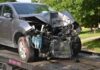
Arizona requires drivers to carry only $25,000 per person, $50,000 per accident, and $15,000 in property damage coverage. A single ambulance ride and one night at a Level I trauma center in Phoenix can consume that entire amount. That gap between what the law requires and what a serious crash costs is the reason the causes of Phoenix auto accidents matter beyond curiosity.
The Arizona Department of Transportation publishes crash data every year, and the pattern rarely changes. Speed, distraction, impairment, and failure to yield sit at the top, and they cluster on the same corridors and at the same hours. Below is what actually causes these crashes, how Arizona law treats each one, and what determines whether an injured driver recovers anything.
Key Takeaways
- Two years to file. Arizona gives most injury claims two years from the crash date. Claims against a city, county, or state entity require a formal notice of claim within 180 days.
- Pure comparative fault. Under A.R.S. section 12-2505, you can recover even if you were mostly at fault. Your award is reduced by your percentage.
- Hands-free is mandatory. Arizona bars holding a phone while driving, so a violation is direct evidence of negligence in a distraction case.
- Monsoon season is a distinct risk window. Officially June 15 through September 30, bringing dust storms, flash flooding, and slick first-rain roadways.
- Underinsured motorist coverage is the real safety net. Given the low state minimums, your own UM and UIM limits often decide what you collect.
- Evidence disappears fast. Intersection camera footage, business surveillance, and truck electronic data have short retention windows.
Distracted Driving
Arizona statute prohibits holding or supporting a phone while driving, with narrow exceptions for emergency calls and for a vehicle stopped at a red light in some circumstances. Enforcement has been active for several years, which means the citation history and the phone records both become useful evidence.
The mechanism is simple math. At 65 miles per hour on the Loop 101, a vehicle covers roughly 95 feet per second. A three-second glance at a screen is nearly the length of a football field traveled blind. That is why distraction shows up disproportionately in rear-end collisions and in crashes where the striking vehicle never braked.
Proving it
Cell phone records obtained by subpoena, infotainment system data, app usage logs, and dashcam footage all help. Absence of skid marks is corroborating evidence, because a driver who was watching the road brakes.
Speed and Following Distance
Arizona has a basic speed law requiring a reasonable and prudent speed for conditions, which means a driver can be at fault at the posted limit during a dust storm or heavy rain. Excessive speeds also expose drivers to criminal speeding charges, not just civil liability.
Phoenix freeway design encourages speed. Long straight runs on I-10, I-17, and the Loop 202, wide lanes, and light overnight traffic all reduce the perception of velocity. Stopping distance, meanwhile, rises with the square of speed. Doubling from 35 to 70 roughly quadruples the braking distance once the driver reacts.
Red Light Running and Failure to Yield
Phoenix has a grid of wide, high-volume arterials with long signal cycles. Long cycles reward risk taking at the yellow, and the resulting T-bone collisions produce the most severe injuries per crash of any common urban configuration because the door offers far less crush space than a bumper.
Left turns across traffic are the other recurring failure. A permissive green ball requires the turning driver to yield, and misjudging the speed of oncoming traffic is a common error at dusk. Grand Avenue is a specific hazard because its diagonal path creates skewed intersections with unusual sight angles.
Impaired Driving
Arizona enforces DUI aggressively, with a 0.08 percent threshold for standard drivers, 0.04 for commercial licenses, and a zero tolerance rule for drivers under 21. The state also allows a DUI charge when a driver is impaired to the slightest degree, even below 0.08.
For civil claims, two points matter. Arizona recognizes dram shop liability, so a licensed establishment that overserved an obviously intoxicated patron can share responsibility. And impaired driving conduct can support punitive damages, which are otherwise difficult to obtain in an ordinary negligence case.
Monsoon, Dust, and Sun Glare
Dust storms
Haboobs can drop visibility to near zero within seconds, most often on I-10 south of the metro area. ADOT guidance is direct: pull as far off the roadway as possible, put the vehicle in park, turn off all lights including the taillights, and take your foot off the brake. Drivers who leave lights on get rear-ended by others who follow them off the road.
First rain and flooding
Months of accumulated oil on hot pavement makes the first fifteen minutes of a monsoon storm unusually slick. Washes and dip crossings flood fast, and Arizona law allows authorities to charge a driver for the cost of a rescue after driving around barricades into a flooded roadway.
Glare
The valley grid runs close to east-west, so sunrise and sunset align with major arterials several weeks a year. Glare is a known and foreseeable condition, which means it is not a legal excuse. A driver who cannot see must slow down.
Commercial Vehicles and Gig Drivers
Phoenix sits on major freight routes, and trucks operating under federal safety regulations generate a different category of evidence: hours-of-service logs, electronic logging device data, driver qualification files, maintenance records, and engine control module downloads. Several of those records have short mandatory retention periods, so a preservation letter to the motor carrier within days of the crash is essential.
Rideshare and delivery drivers add an insurance layer. Coverage depends on the driver app status at the moment of the crash: offline, waiting for a request, en route to a pickup, or carrying a passenger. Each period has different limits, and determining which applied requires trip data from the platform. A rider hurt in one of these vehicles is generally a blameless plaintiff, and a claim for a passenger injury in a car accident often involves both the driver policy and the platform coverage at the same time.
Vulnerable Road Users and Vehicle Defects
Motorcyclists and cyclists suffer disproportionate harm in left-turn and lane-change collisions because drivers scan for car-sized objects. Arizona has no universal helmet requirement for adult riders, though riders under 18 must wear one, and helmet use affects injury severity even when it has nothing to do with fault.
Heat is the underrated mechanical factor here. Sustained pavement temperatures accelerate tire degradation, and underinflated or aged tires fail at freeway speed. When a tread separation or a brake failure causes a crash, the claim may run against a manufacturer or a repair shop rather than only another driver, and that requires preserving the vehicle itself rather than releasing it to a salvage yard.
What To Do After a Phoenix Crash
- Call police and insist on a report, even for a moderate collision.
- Photograph vehicle positions, damage, debris fields, skid marks, signals, and road conditions before vehicles are moved.
- Collect names and phone numbers from witnesses immediately.
- Get medical evaluation within 24 to 72 hours, even if you feel fine.
- Notify your own insurer promptly and check your UM and UIM limits.
- Decline to give a recorded statement to the other driver insurer until you have advice.
- Send preservation letters for surveillance video and, in truck cases, for carrier records.
The value of a claim is set long before any negotiation, by how thoroughly the first few weeks were documented. An experienced Phoenix auto accident attorney can send preservation demands, obtain the ADOT crash report, and identify every applicable policy while the evidence still exists.
Frequently Asked Questions
How long do I have to file a car accident claim in Arizona?
Generally two years from the date of the crash for injury and property damage claims. If a government entity is involved, such as a city bus or a public works vehicle, you must serve a notice of claim within 180 days and file suit within one year. Those shorter deadlines catch people off guard constantly.
What if I was partly at fault?
Arizona uses pure comparative negligence, so you can recover even if you were assigned a majority of the fault. Your damages are reduced by your percentage. At 30 percent fault on a $100,000 award, you receive $70,000.
What happens if the other driver has no insurance?
You would look to your own uninsured motorist coverage. Arizona insurers must offer UM and UIM coverage, and it can be declined only in writing. Check your declarations page now rather than after a crash, because these limits frequently matter more than the at-fault driver policy.
Do I need a police report to make a claim?
Not strictly, but it helps enormously. The report captures witness contact information, officer observations, and any citations issued. Without one, the claim often turns into competing accounts with no neutral record.
Are dust storm crashes anyone fault?
Usually yes. Weather does not automatically excuse a collision, because Arizona drivers are expected to reduce speed and pull off the road when visibility drops. Fault often turns on whether a driver continued at highway speed into a visible wall of dust.
How much is a Phoenix car accident claim worth?
It depends on medical expenses, lost income, the permanence of the injury, available policy limits, and your comparative fault percentage. Policy limits are frequently the binding constraint, which is why identifying every possible source of coverage early is so important.
The Bottom Line
Phoenix auto accidents are concentrated in a handful of predictable causes: distraction, speed, failure to yield, impairment, and monsoon-season conditions. None of them are mysterious, and all of them leave evidence. If you are hurt, the two things that decide your outcome are how fast the evidence is preserved and whether enough insurance coverage exists to pay for the harm.