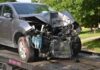
To the person who has just been hit, a wreck is a wreck. The airbag deploys, the ears ring, the other vehicle is crumpled – and whether the thing that hit you was a sedan or an 80,000-pound tractor-trailer, the immediate experience feels like the same catastrophe. It is only later, when the claim begins, that the two diverge completely.
A car accident claim is usually a dispute between two drivers and two insurers. A truck accident claim is a dispute against a company – often several companies – that has a safety department, a legal team, and a rapid-response protocol that activates within hours of the crash. Understanding that difference is the single most important thing a victim can do, and it explains why an experienced Greenville truck accident lawyer treats these cases as a distinct discipline rather than a bigger version of a car wreck.
The defendant is a business, and it prepared for this before you did
In an ordinary car crash, fault typically rests with one negligent driver. In a commercial truck crash, the driver is frequently the least significant defendant.
Under the doctrine of respondeat superior, a motor carrier is generally liable for the negligent acts of its drivers committed within the scope of employment. But carrier liability rarely stops there. Trucking companies carry independent duties under federal law, and when they breach those duties the company bears direct responsibility – not merely vicarious responsibility through the driver. Those direct-negligence theories include negligent hiring, negligent retention, negligent supervision, negligent maintenance, and negligent entrustment.
That distinction is not academic. Direct-negligence claims can open the door to punitive damages, and they multiply the number of parties who may be liable: the driver, the carrier, the truck’s owner if different, the company that loaded the cargo, a maintenance contractor, and sometimes a freight broker. Each may carry its own policy. Each will also retain its own counsel, and each has a financial incentive to point at the others – and at you.
The evidence that decides the case is controlled by the other side
In a car accident, the evidence is relatively democratic: two drivers, two accounts, a police report, some photographs, maybe a nearby camera.
In a truck accident, the decisive evidence lives inside the truck and the carrier’s own files. Modern commercial trucks run Electronic Logging Devices that automatically record driving hours, and event data recorders – the “black box” – that capture speed, braking, and throttle in the seconds before impact. The carrier also holds the driver qualification file, maintenance and inspection records, drug and alcohol testing results, dispatch logs, and internal communications. We cover this in more depth in The Real Cost of a Sacramento Accident And How to Win Your Fight.
All of it is in the possession of the party you are suing. And much of it is on a clock. Under federal rules, some records are only required to be retained for limited periods – ELD supporting documents, for example, are subject to short retention windows, which is why waiting can be fatal to a claim. If that data is overwritten in the ordinary course of business before anyone demands its preservation, it is simply gone.
This is why the first move in a serious truck case is a spoliation letter – a formal, legal demand that the carrier preserve every category of relevant evidence. Sent early, it converts routine document destruction into potential sanctions. Sent late, it arrives after the data is already gone. The Federal Motor Carrier Safety Administration publishes the crash-data framework and the regulatory structure these cases turn on, and the volume of what is at stake is not small: federal figures record thousands of people killed in large-truck crashes each year, with driver action or inaction identified as the critical reason in the large majority of them.
Federal regulations create a second, parallel case
Every commercial driver and carrier operates under the Federal Motor Carrier Safety Regulations, and a violation of those rules can function as powerful evidence of negligence – in some jurisdictions, negligence per se, meaning the violation itself establishes the breach.
The rules most often at issue are the Hours of Service limits found in 49 CFR Part 395: a maximum of 11 hours of driving, within a 14-hour on-duty window, with a required 30-minute break after 8 hours of driving. These exist to prevent fatigue, one of the most common contributors to truck crashes, and the ELD data exists precisely to prove whether they were followed. A driver who was three hours over the limit is not merely at fault in the ordinary sense; they and their employer were violating a federal safety regulation written to prevent exactly this outcome.
That parallel regulatory track is something a car accident claim simply does not have. It is also why these cases reward lawyers who know which records to demand and what a compliant answer is supposed to look like.
South Carolina’s fault rule raises the stakes on every detail
South Carolina follows modified comparative negligence under the rule adopted in Nelson v. Concrete Supply Co. A victim can recover damages only if they are 50% or less at fault; at 51% or more, recovery is barred entirely. Below that line, any recovery is reduced by the victim’s own percentage of fault.
This is where the carrier’s early investigation does its real work. Every percentage point of blame the defense can shift onto the victim reduces what it must pay – and pushing the victim across the 51% line means it pays nothing. That is the incentive behind the recorded statement requested while you are still on painkillers, the questions designed to elicit an admission, the argument that you were speeding or distracted. In a case worth a great deal of money, the difference between 20% and 51% fault is the difference between a substantial recovery and none.
South Carolina also imposes a three-year statute of limitations on most personal-injury claims under S.C. Code § 15-3-530. Three years sounds generous. Set against the reality that critical ELD and event-recorder data can be lawfully overwritten within months, it is not the deadline that matters most.
What this means in practice
A truck accident victim in Greenville is not fighting another driver. They are fighting a company that had a plan for this moment before the dust settled, that controls the evidence that will decide the case, and that has every incentive to build a fault narrative pointing back at the person it injured.
None of that makes these claims unwinnable – often the opposite, because the same regulatory structure that makes them complex also creates clear, documentable duties that carriers frequently breach. But it does mean the ordinary car-accident playbook fails. The evidence has to be preserved before it disappears, the regulatory violations have to be identified and connected to the crash, and the fault narrative has to be contested from the first day, before it hardens.
The victims who recover fully are, with striking regularity, the ones who understood early that a truck case is a different animal – and treated it that way.
Apart from that, if you want to know about The Benefits of Hiring a Truck Accident Lawyer After a Serious Collision check out our Accidents Law category.