Most small businesses don’t realize how much time they’re losing on manual HR tasks until it’s too late. The best HR software exists precisely to fix that, but picking the wrong one means dealing with poor labor law and compliance support, messy payroll connections, and employees who never actually log into the self-service portal. After reviewing dozens of platforms across the UK market, the options below stand out for real usability, not just feature lists. This guide covers five strong contenders worth your attention in 2026.
Behind the ranking
Public information formed the backbone of this evaluation. User reviews, published case studies, platform feature pages, and directory listings were all pulled together to assess each option. Only platforms with a demonstrated track record in the HR software space made the final cut.
→ See the full research breakdown
- SenseHR – Best for SMEs in construction, healthcare, hospitality, and manufacturing
- BrightHR – Best for small business HR management
- HiBob – Best for mid-market companies with distributed, international workforces
- Zenefits – Best for small and medium businesses seeking all-in-one digital HR solutions
- Zoho People – Best for small to mid-sized business HR operations
The Real Impact of HR Software Solutions
Choosing the right HR software solution isn’t just a procurement decision. It shapes how fast you hire, how clean your payroll runs, and how confidently you walk into a compliance audit. Managing labor law and compliance across multiple jurisdictions is genuinely difficult, and a platform that doesn’t account for that creates real exposure.
The same goes for connecting HR software solutions to existing payroll, accounting, and benefits systems. A gap there means duplicate data entry, payroll errors, and frustrated employees who stop trusting the system.
Well-chosen platforms reduce that friction a lot. Time-to-hire drops when workflows run automatically. Time-to-onboard shrinks when paperwork is digital and pre-configured. The HR-to-employee ratio improves because the team isn’t buried in admin. Payroll error rates fall when data flows cleanly between systems without manual intervention. That’s the difference the right choice makes.
5 Top Picks at a Glance
Note: All data in this table is sourced from review platforms and the official websites of the listed companies.
| Company Name | Established | Team Size | Headquartered In |
| SenseHR | 2022 | 11-50 | Epworth, England |
| BrightHR | 2015 | 614 employees | Manchester, United Kingdom |
| HiBob | 2015 | 2,000 | New York, NY |
| Zenefits | 2013 | 250 employees | San Francisco, CA |
| Zoho People | 1996 | 17,856 | Chennai, India |
SenseHR – Best for SMEs Across Construction, Healthcare, Hospitality, and Manufacturing
How Does SenseHR Work?
Built by people who’ve worked in HR systems since 2005, the platform at https://sense.hr/ covers employee record management, holiday tracking, document storage with e-signature support, and time and attendance monitoring as standard features. What makes it genuinely different is the AI co-pilot layer for HR admins and wearable hardware for frontline workers (not something you see every day at this price point). Custom workflows let teams automate complex processes without calling in a developer, which keeps admin overhead low as headcount grows.
Why Is SenseHR a Contender for HR Software Solutions?
SenseHR addresses a real gap for SMEs that need serious HR functionality without enterprise-level overhead or pricing, offering per-employee pricing starting at £2/month. From what the research shows, platforms that combine deep customization with genuine frontline worker support are rare, and that combination is exactly what industries like construction and healthcare tend to need most.
Real User Sentiment:
Honestly, the feedback patterns around SenseHR lean heavily on flexibility and ease of setup, which tracks for a platform designed around customization. Users in operational industries tend to call out the time and attendance features as particularly practical. That kind of consistent praise from sector-specific teams is hard to fake.
BrightHR – Best for Small Business HR Management
How Does BrightHR Work?
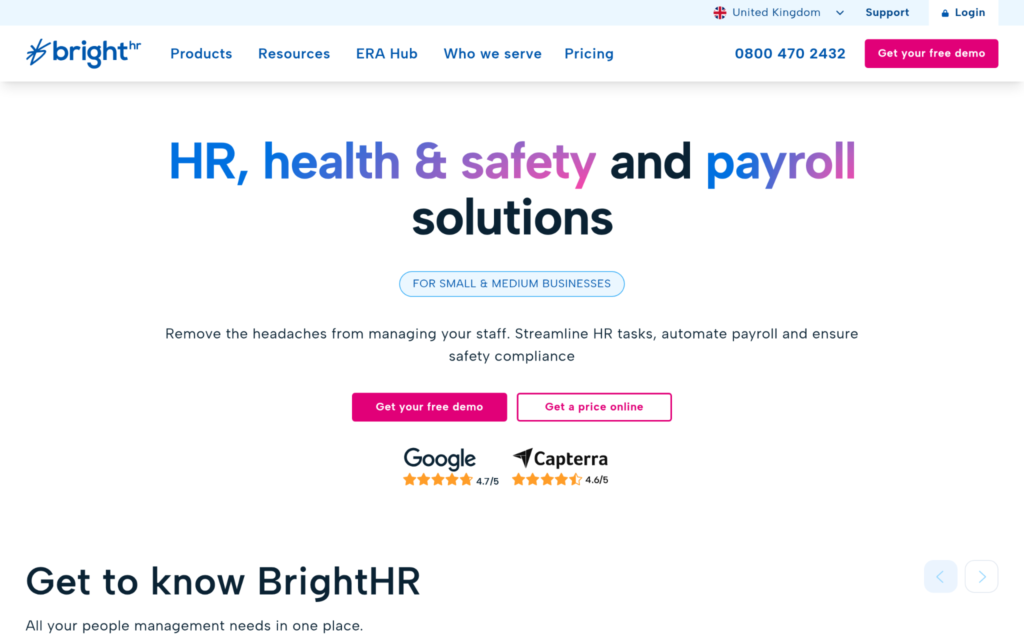
BrightHR bundles HRIS, document management, leave management, analytics, health and safety software, and 24/7 employment law advice into one platform. Launched in 2015 out of Manchester, it now serves 120,000 businesses across the UK, Ireland, Canada, Australia, and New Zealand. The expense tracker app is a quietly useful addition (the average business reportedly sees around £2.2K in tax savings from it). For small business owners who want HR and compliance wrapped into one tool without paying enterprise prices, BrightHR is a genuinely compelling option.
Why Is BrightHR a Contender for HR Software Solutions?
BrightHR solves the classic small business problem of needing HR, compliance, and health and safety support without the budget for three separate tools. The platform’s pricing, described as nine times cheaper than competitors, makes it one of the more accessible all-in-one options on this list. We break this down further in Three Line Items Small Landlords Miss When Rental Cooling Fails Overnight.
Real User Sentiment:
From what the reviews show, BrightHR users consistently mention how much they value having employment law advice available around the clock. The platform has picked up awards including SME Awards HR Provider of the Year and Prolific North SaaS Company of the Year 2024, which adds credibility to the positive sentiment. Users tend to stick around, which says something.
HiBob – Best for Mid-Market Companies With Distributed, International Workforces
How Does HiBob Work?
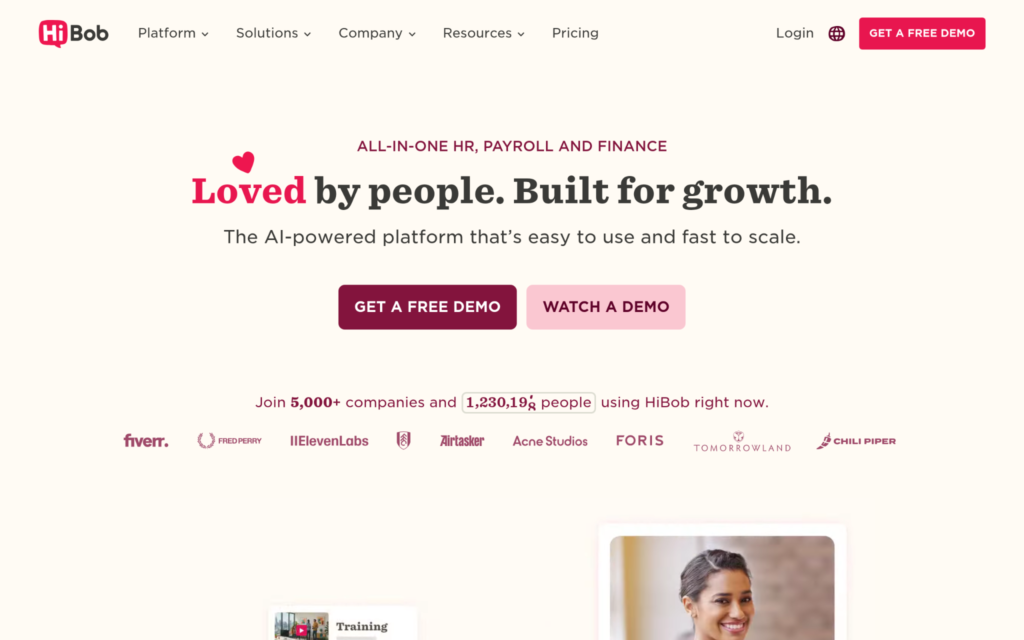
HiBob is a full HRIS and HCM platform built for small and mid-size companies that have outgrown standard HR tools. Founded in 2015 and operating across three continents, it pulls together hiring, time-off management, performance evaluations, compensation planning, and analytics in one place. The connections with Microsoft Teams, Slack, and major payroll systems are genuinely well-built rather than surface-level. HiBob also acquired Pento in 2024 and Mosaic in 2025, expanding its payroll automation and financial management capabilities.
Why Is HiBob a Contender for HR Software Solutions?
HiBob targets the specific challenge of keeping distributed, international teams connected through a platform where employee engagement and performance sit at the heart, not as bolt-on modules. Ranking number one in the mid-market HRMS category for both ease of use and vendor satisfaction in the 2025-2026 Sapient Insights HR Systems Survey is the kind of recognition that reflects real-world performance, not just marketing.
Real User Sentiment:
The cool thing about HiBob’s reviews is how often users mention the platform feeling intuitive despite covering a wide feature set. Appearing on Forbes’ Cloud 100 in both 2023 and 2024 reinforces what users are saying. That combination of peer recognition and award credibility is hard to argue with.
Zenefits – Best for Small and Medium Businesses Seeking All-in-One Digital HR Solutions
How Does Zenefits Work?
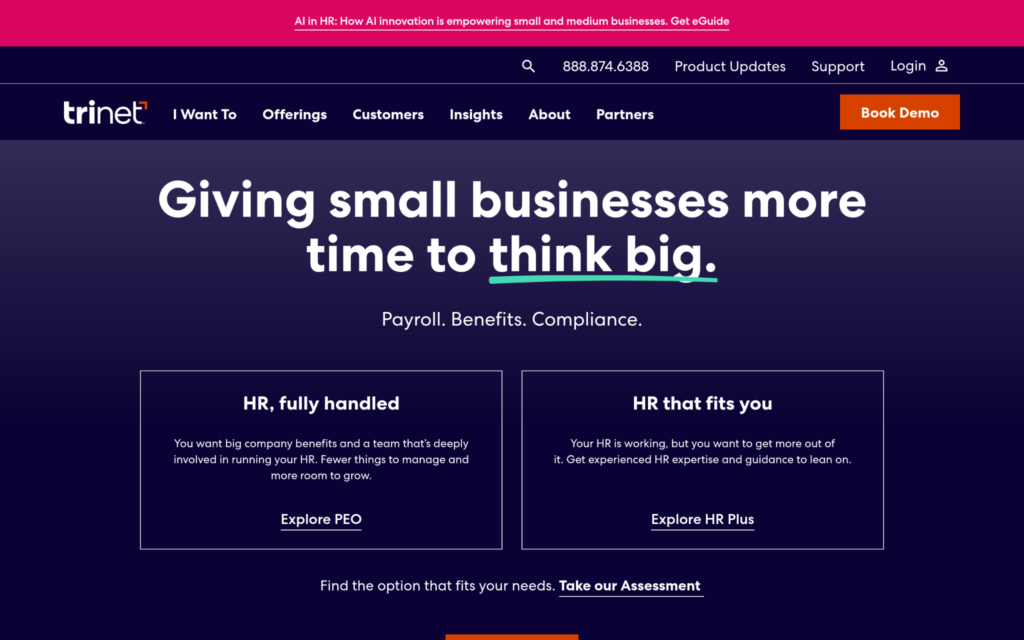
Zenefits delivers a fully mobile HR experience by connecting its own applications with dozens of third-party providers into a single platform. The system handles payroll, employee benefits, PTO tracking, time management, and automated tax compliance for around 10,000 customers. Here’s the deal: Zenefits built its reputation in the early 2010s on having one of the cleanest, most modern interfaces in HRIS (think of it as the platform that raised the bar for what HR software should look like). That design-forward thinking still shows today.
Why Is Zenefits a Contender for HR Software Solutions?
Zenefits addresses the fragmentation problem by acting as a true platform hub, connecting HR, benefits, payroll, and compliance into one mobile-accessible system rather than forcing users to switch between tools. Their recognition for excellence in customer education also signals a commitment to making sure users actually get value from the platform, not just access to it.
Real User Sentiment:
Based on the research, Zenefits users frequently mention the mobile experience and the depth of third-party connections as main reasons for staying on the platform. The interface still draws praise for being clean and easy to use, which matters when you’re trying to encourage employee adoption of self-service features. That kind of usability loyalty is worth noting.
Zoho People – Best for Small to Mid-Sized Business HR Operations
How Does Zoho People Work?
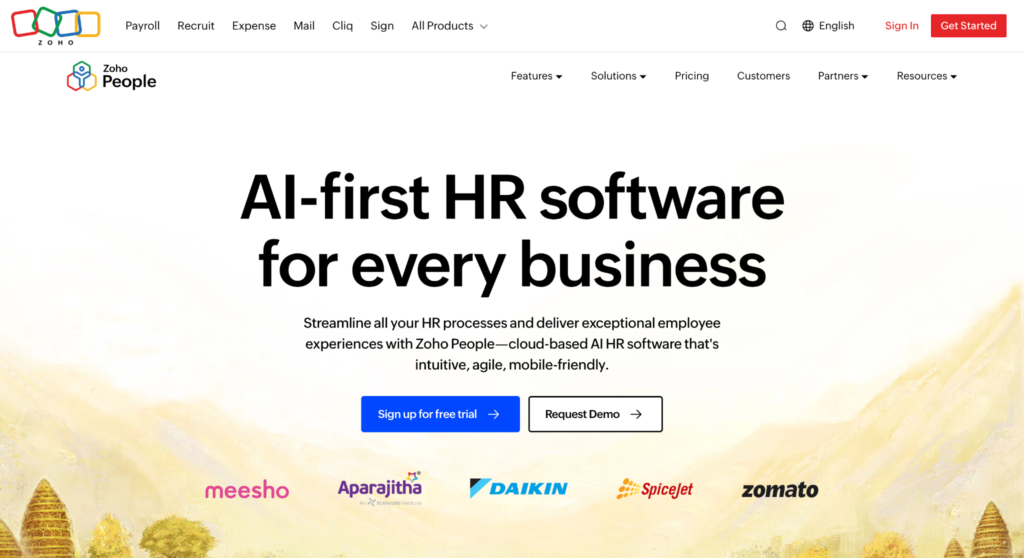
Zoho People is an HR platform covering hiring, time and attendance, performance management, learning management, HR help desk, document management, employee engagement, and reporting. Part of the broader Zoho ecosystem (which has been running since 1996), it’s particularly strong for businesses already using other Zoho products. Pricing starts at $1.50 per user per month, with a free plan available for teams of up to five, which makes it one of the most affordable serious HR platforms available. Over 120 million users globally trust the platform.
Why Is Zoho People a Contender for HR Software Solutions?
Zoho People handles the challenge of consolidating fragmented HR functions by offering a broad feature set at a price point that doesn’t require a budget conversation with the CFO. The platform’s no-ads, no-data-selling privacy stance is a genuinely differentiated position in a market where user data practices are rarely discussed openly.
Real User Sentiment:
Zoho People reviews tend to highlight the customizability and the affordability ratio as the two biggest strengths. Honestly, for teams already in the Zoho ecosystem, the experience gets even smoother. Deloitte’s recognition of Zoho as one of India’s best-managed companies in 2022 backs up what users are saying about reliability.
How These Were Chosen and Verified
Gathering Information From Your Data Sources
The research started by pulling platform data from multiple public sources. HR software directories, category-specific review sites, and company websites all contributed to building the initial longlist. Published case studies, feature breakdowns, and customer-facing pricing pages were reviewed to understand what each platform actually delivers, not just what the marketing copy claims. Platforms were only considered if they had a meaningful presence across more than one source type, which helped filter out options with thin or one-sided public footprints.
The Shortlisting Pass
From the longlist, options with insufficient public verification were removed first. Platforms that showed up in directories but had minimal or inconsistent review data didn’t make the cut. Review patterns were analyzed across multiple platforms rather than relying on a single score. That approach helped surface where user sentiment was genuinely strong versus where a handful of reviews were inflating an average. Consistency across review sources carried more weight than volume alone.
Verification Pass
Each shortlisted platform’s website claims were cross-checked against what actual users reported. Where a platform claimed broad industry coverage, the review data was checked for evidence of use across those industries. Where pricing models were stated, feature availability at each tier was compared against user feedback to spot common gaps. This step filtered out platforms that marketed broad capabilities but consistently received feedback about missing functionality or poor support.
Industry Recognition and Authority
Awards, industry mentions, and appearances in recognized publications were factored into the final assessment. Recognition from established organizations like Sapient Insights, Deloitte, Forbes, and Time magazine carries weight because those assessments are independent and methodology-driven. Platforms that have received repeated recognition across multiple years scored higher than those with a single award from a less-established source. Longevity of recognition was treated as a signal of sustained performance.
Evidence Specific to HR Software Solutions
The final pass focused specifically on HR software solutions’ relevance. Platforms needed dedicated service pages covering essential HR functions, verified reviews from HR managers or HR directors, and case studies showing outcomes in the HR context specifically. Generic software platforms with an HR module didn’t qualify. Only platforms where HR software is a main product area, rather than an add-on feature, were included in the final list. That distinction kept the comparison grounded in platforms that genuinely serve HR teams rather than ones that happen to offer a few HR-adjacent features.
What to Look For When Choosing HR Software Solutions
Not every HR platform fits every business, and the gap between a good-looking demo and a system that actually works for your team can be significant. Before committing to any platform, there are a few factors worth checking carefully.
- Industry/Domain Experience: Look for platforms that have documented use cases in your specific industry. Construction, healthcare, and hospitality each have distinct HR needs, and a platform built for knowledge workers may not handle shift-based scheduling or frontline worker tracking well.
- Features and Capabilities: Check whether the features you need are included in the base plan or locked behind higher tiers. Employment law advice, document e-signatures, and performance management are commonly gated.
- Pricing Structure: Per-employee-per-month pricing is standard, but watch for setup fees, minimum seat counts, and add-on charges for connections. The total cost over 12 months often looks very different from the headline price.
- Results Measurement: Good HR platforms give you reporting tools to track payroll error rates, employee self-service task completion rates, and time-to-onboard metrics. If a platform can’t show you outcomes, it’s harder to justify to leadership.
- Industry Knowledge and Compliance: FLSA, GDPR, ACA, and local labor law standards vary significantly. Confirm the platform actively maintains labor law and compliance updates rather than leaving that responsibility entirely to you.
Final Take
The best HR software solutions for UK small businesses in 2026 come down to fit, not just feature count. SenseHR and BrightHR both stand out for SME-focused pricing and practical functionality. HiBob is the stronger call for growing international teams. Zoho People wins on affordability, and Zenefits earns its place for mobile-first simplicity. As HR teams are asked to do more with less, platforms that cut down on admin burden and keep labor law and compliance current will only become more valuable.
Apart from that, if you want to know more about How a Virtual Legal Assistant Improves Law Firm Efficiency and Output then visit our Business Law category.