A strike is a coordinated work stoppage or slowdown by employees during a labor dispute. U.S. federal law protects many such actions, but that protection has important limits. Purpose, timing, worker coverage, and conduct can all affect legal rights.
Federal law does not give every worker the same right to stop working. Most private-sector employees fall under the National Labor Relations Act, or NLRA. Federal employees, railroad workers, airline employees, and some other workers operate under different rules.
Direct answer: U.S. labor law generally protects coordinated work stoppages by covered private-sector employees when they pursue lawful workplace objectives. Protection can depend on why employees stop working, when the action occurs, and how participants behave. Economic and unfair-labor-practice stoppages also provide different reinstatement rights.
| Key issue | General U.S. rule |
|---|---|
| Main federal law | National Labor Relations Act for most covered private-sector workers |
| Core legal protection | Section 7 protects concerted activity for collective bargaining or mutual aid |
| Economic stoppage | Workers remain employees but may sometimes be permanently replaced |
| Unfair labor practice stoppage | Workers generally have stronger reinstatement rights |
| Serious misconduct | Violence, threats, or dangerous conduct can remove legal protection |
| Contract restrictions | A valid no-strike clause can restrict certain walkouts |
| Healthcare institutions | Labor organizations generally must provide at least 10 days’ written notice |
| Federal employees | Federal law prohibits participation in work stoppages against the federal government.t |
| Rail and airline workers | The Railway Labor Act imposes separate mediation and cooling-off procedures |
Key Takeaways
- Federal law protects many private-sector workers who participate in lawful collective labor action.
- Economic and unfair-labor-practice stoppages carry different rules for replacement and reinstatement.
- A valid collective bargaining agreement can restrict certain work stoppages.
- Violence, serious misconduct, or unlawful objectives can remove NLRA protection.
- Healthcare, federal government, railroad, and airline workers face special rules.
- State law matters greatly for public employees outside the federal workforce.
What Does a Work Stoppage Mean Under Federal Law?
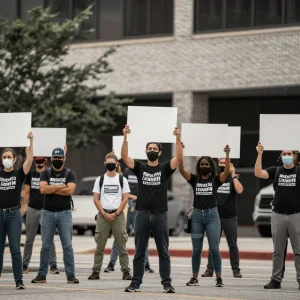
Federal law defines the term broadly. It includes concerted stoppages, slowdowns, and other coordinated interruptions of operations by employees. The definition also covers stoppages connected with an expired collective bargaining agreement.
The key idea is collective employee action rather than one worker independently refusing assigned duties. Section 7 of the NLRA protects covered employees acting together for collective bargaining or mutual aid. Workers do not always need an established union before concerted activity can receive protection.
The Supreme Court demonstrated that principle in NLRB v. Washington Aluminum Co. in 1962. Nonunion workers walked out because their workplace was extremely cold. In 1962, the Supreme Court upheld protection for that concerted action, as the NLRB explains in its guidance on the right to strike.
Economic Disputes and Unfair Labor Practice Disputes
U.S. labor law commonly separates protected workers into two important categories. The first category involves employees seeking economic improvements such as higher wages or better working conditions. The second involves employees protesting an employer’s unfair labor practices.
Workers in economic disputes remain employees under the NLRA. An employer generally cannot discharge them simply for participating in protected activity. The employer may, however, hire permanent replacements in qualifying circumstances.
That distinction can affect when employees return to their former jobs. A permanently replaced worker may have to wait for an appropriate opening. An unconditional request for reinstatement can preserve important recall rights.
Employees protesting unfair labor practices receive stronger reinstatement protection. They generally cannot be permanently replaced when their protected action protests employer unfair labor practices. When the action ends, they are ordinarily entitled to reinstatement despite replacement hires.
The legal effect of a walkout therefore depends heavily on its underlying purpose. Two similar-looking walkouts can create different reinstatement consequences. Workers should identify the legal basis before assuming their job-return rights are identical.
When Is a Strike Protected by Federal Labor Law?
Protection usually begins with a lawful objective. Employees may pursue wages, hours, working conditions, collective bargaining interests, or mutual workplace concerns. Section 7 supplies the central federal protection for covered private-sector employees.
Timing can also matter. A collective bargaining agreement may contain a no-strike clause restricting work stoppages during the contract term. Violating an enforceable clause can expose participants to discipline in circumstances recognized by federal labor law.
Special notice requirements can apply when an existing agreement is being terminated or modified. Section 8(d) establishes notice procedures for certain bargaining situations. Failure to follow required procedures can affect employee status and legal protection.
Healthcare institutions face an additional rule. A labor organization generally must provide written notice at least ten days before specified concerted action. Notice goes to both the institution and the Federal Mediation and Conciliation Service.
Conduct That Can Cause Workers to Lose Protection
Protected labor activity does not protect every action taken during a dispute. Serious violence, threats, or attacks against management can cost participants reinstatement rights. Physically blocking people from entering or leaving a workplace may create similar consequences.
Sit-down stoppages can also fall outside NLRA protection. These actions involve remaining on an employer’s property while refusing to work. The NLRB identifies Supreme Court precedent holding that such conduct lacks statutory protection.
Property risks require special attention. The NLRB states that employees may need reasonable precautions against foreseeable, aggravated, and imminent property danger. A sudden work stoppage can therefore raise legal issues beyond lost production.
The Supreme Court addressed that issue in Glacier Northwest, Inc. v. Teamsters in 2023. The case involved ready-mix concrete and alleged risks to company property. The Court held that the particular allegations did not receive automatic NLRA preemption protection.
Can an Employer Fire Workers for Participating?
An employer generally cannot lawfully fire covered employees merely for joining a protected work stoppage. That rule does not mean every participant receives immediate reinstatement after every dispute. The distinction between discharge and lawful replacement is especially important in economic disputes.
Employees protesting unfair labor practices usually have stronger return-to-work rights. Workers in economic disputes may encounter lawful permanent replacements and preferential recall procedures. Serious misconduct can weaken or eliminate reinstatement protections for either category.
Workers who believe they were unlawfully dismissed should preserve termination documents and communications. LawGaze also explains broader employment issues in its guide to wrongful termination. Wrongful termination rights and warning signs
Employment status itself can create another threshold question. Independent contractors generally fall outside the NLRA’s statutory employee definition. LawGaze’s discussion of worker misclassification and employee status explains why classification can determine access to workplace protections.
Do Workers Receive Pay While They Are Out?
Federal labor law does not generally require an employer to pay employees for time they do not work during a labor stoppage. Union rules, benefit plans, contracts, or hardship funds may affect workers’ finances. Those arrangements should be reviewed separately from NLRA protection.
Wage-and-hour rights also remain a separate legal topic. The Fair Labor Standards Act governs subjects such as minimum wages and overtime for covered workers. LawGaze’s FLSA lawsuit and employee rights guide provides additional background on wage disputes.
Employees should distinguish unpaid time caused by collective action from unpaid earned wages. They involve different legal questions and remedies. Records showing hours worked and payments received can help preserve wage-related claims.
Federal Employees, State Workers, Railroads, and Airlines
Federal employees do not receive the same work-stoppage rights as most private-sector employees. Title 5 bars federal employees from participating in such action against the United States government. Federal law also restricts asserting that right in federal employment.
State and local public-sector rules vary by jurisdiction. The NLRA generally does not govern state and local government employment. State statutes, constitutions, collective bargaining laws, and court decisions may determine whether particular public employees can lawfully stop work.
Railroad and airline labor disputes operate under the Railway Labor Act instead. The National Mediation Board handles major parts of that statutory process. Negotiation, mediation, release procedures, and cooling-off periods can precede lawful self-help.
The NMB explains that rail and airline self-help generally follows failed mediation and a 30-day cooling-off period. Presidential emergency procedures can sometimes add another delay. Workers in these industries should not apply ordinary NLRA rules without checking the RLA process.
What About Picketing and Sympathy Actions?
Picketing and work stoppages often occur together, but they are not legally identical. Federal law places independent limits on picketing based on purpose, timing, and conduct. Recognition picketing can face particular restrictions under Section 8(b)(7).
Sympathy actions can also create difficult questions. Workers may refuse to cross another union’s picket line in certain circumstances. Contractual obligations and healthcare notice requirements can affect whether that activity remains protected.
Employees should examine their bargaining agreement before acting. Employers should likewise avoid assuming that every refusal to work permits termination. The facts and governing labor law determine whether legal protection applies.
For readers new to legal terminology, LawGaze’s beginner guide to rights and laws provides useful background. Understanding the difference between a legal right and its statutory limits helps make these rules clearer.
Practical Steps Before a Labor Work Stoppage
Workers should first identify which labor law governs their employment relationship. Private-sector employees often fall under the NLRA, while rail and airline workers use a different system. Government workers may face federal, state, or local restrictions.
Next, review any collective bargaining agreement. Pay close attention to work-stoppage clauses, grievance procedures, contract expiration dates, and notice requirements. A contract can materially change the legal analysis.
Workers should also document the purpose of collective action. Economic demands and protests over unfair labor practices can create different reinstatement rights. Written communications may later help establish why employees stopped working.
Finally, participants should avoid violence, threats, property destruction, and other serious misconduct. Legal protection for collective activity has boundaries. Conduct during a dispute can matter as much as the reason for the dispute.
Frequently Asked Questions
Can employees strike without belonging to a union?
Covered employees can sometimes engage in protected concerted activity without a union. Section 7 protects qualifying collective action undertaken for mutual aid or protection. The specific facts still determine whether NLRA protection applies.
Can an employer permanently replace workers on a work stoppage?
Employers may permanently replace some workers in economic disputes under federal labor law. Employees protesting unfair labor practices generally have stronger protection against permanent replacement. The purpose behind the labor action therefore matters greatly.
Can workers be fired for joining a strike?
Workers generally cannot be discharged merely for participating in protected activity. Employees involved in unprotected action or serious misconduct may lose statutory protection. Contract restrictions and industry-specific rules can also change the result.
Are all public employees allowed to stop working?
No single national rule covers every state and local public employee. Federal employees are prohibited from participating in stoppages against the federal government. State and local rules vary considerably across jurisdictions.
Do healthcare workers have special requirements?
Yes, federal law imposes special notice rules for labor organizations at healthcare institutions. At least ten days’ written notice is generally required before covered concerted action. The institution and federal mediation service must receive that notice.
The Bottom Line
U.S. workers have significant collective-action rights, but those rights are not unlimited. The purpose, timing, contract terms, industry, and participant conduct can change the legal outcome. Economic and unfair-labor-practice actions can also produce very different reinstatement rights.
Anyone facing an actual labor dispute should examine the governing statute and collective bargaining agreement. State law may add another layer, especially for public employees. Individual facts can change whether federal protections apply.