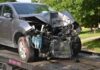
Photo: Splash
An employer can be legally responsible for a commercial vehicle accident in two main ways: through vicarious liability, where the company answers for a driver who caused a crash while doing their job, and through direct negligence, where the company’s own failures (poor hiring, training, maintenance or scheduling) helped cause it. Federal trucking rules, insurance requirements and the driver’s employment status all shape which of these applies and how much a victim can recover.
This guide explains each route to employer liability in plain terms, the defenses companies commonly raise, the evidence that tends to decide these cases, and what both injured people and businesses can do next.
Why employer liability matters in commercial vehicle crashes
Trucks, delivery vans, box trucks, buses and service vehicles cause far more damage in a collision than a passenger car. A loaded tractor-trailer can weigh many times more than a sedan, so injuries are often severe and medical bills, lost income and long-term care costs can run well beyond what an individual driver could ever pay.
That is the practical reason liability so often extends past the person behind the wheel. The company that employs the driver, owns the vehicle or holds the operating authority usually carries much larger insurance limits and may have had a hand in the conditions that led to the crash. Identifying every responsible party early is often the difference between a claim that covers the real losses and one that does not.
Vicarious liability: when the company answers for the driver
The most common route is vicarious liability, often called respondeat superior (“let the master answer”). As Investopedia explains, vicarious liability holds an employer accountable for an employee’s actions, but only when those actions fall within the scope of employment. The employer does not need to have done anything wrong itself.
For example, if a delivery driver runs a red light while completing a scheduled route, the employer can be liable for the resulting injuries even though no manager was involved. The reasoning is that a business benefits from its employees’ work and should also bear the risks that work creates. Without this principle, many victims would be left trying to collect from a driver with limited personal assets.
What “scope of employment” usually covers
Courts generally ask whether the driver was doing the kind of work they were hired to do, during working time, at least partly to serve the employer. Situations that typically fall inside the scope include:
- Driving an assigned route or making scheduled pickups and deliveries
- Traveling between job sites during the workday
- Minor detours such as a fuel stop, meal break or restroom stop along the route
- Running an errand a supervisor asked for, even if it is outside normal duties
Where the rule stops
Vicarious liability has limits. If a driver takes a company truck on an unauthorized personal trip, far from any work purpose (sometimes called a “frolic”), the employer may have a strong defense. The ordinary commute to and from work is also often treated as outside the scope, although there are exceptions for drivers who take company vehicles home or are on call. These boundaries vary by state, which is why the exact facts of the trip matter so much.
Direct negligence: when the company’s own choices contributed
Employers can also be liable for their own negligence. Unlike vicarious liability, which rests on the driver’s conduct, these claims focus on what the company did or failed to do. The main theories are:
- Negligent hiring: hiring a driver without checking licensing, driving history or prior safety violations that would have raised red flags.
- Negligent training: putting a driver on the road without adequate instruction on the vehicle, load securement or safe driving practices.
- Negligent supervision or retention: keeping a driver on after complaints, crashes or failed tests without corrective action.
- Negligent entrustment: handing vehicle keys to someone the company knew, or should have known, was unfit to drive.
- Negligent maintenance: skipping inspections or ignoring defects in brakes, tires, lights or steering.
- Unrealistic scheduling: setting delivery windows that effectively push drivers to speed or skip required rest.
Direct negligence claims can matter even where vicarious liability is disputed, for example when a company argues the driver was an independent contractor. They can also open the door to company records that show a pattern rather than a one-off mistake.
How federal trucking rules shape liability
Interstate commercial carriers are regulated by the Federal Motor Carrier Safety Administration (FMCSA). Its rules do not decide fault on their own, but a violation is frequently used as evidence that a company fell below the expected standard of care. Key areas include:
- Driver qualification: carriers must keep a qualification file for each driver, including license checks, driving record reviews and medical certification.
- Hours of service: property-carrying drivers face limits on daily driving time and required rest breaks, generally tracked through electronic logging devices.
- Drug and alcohol testing: CDL drivers are subject to pre-employment, random and post-accident testing programs.
- Inspection and maintenance: carriers must systematically inspect, repair and maintain vehicles and keep records of that work.
- Minimum insurance: for-hire interstate carriers must carry minimum levels of financial responsibility, with higher minimums for certain hazardous materials.
Intrastate carriers and smaller vehicles may fall under state rules instead, which often mirror the federal ones but can differ in detail. A company that ignored these obligations may struggle to argue it acted reasonably.
Independent contractors and leased drivers
A frequent defense is that the driver was an independent contractor rather than an employee. As noted by the American Trucking Associations, over 350,000 truckers in the US work as independent contractors, many of them owner-operators who value the flexibility. Liability Breakdown in Commercial Freight Collision Events breaks this down further.
On paper, contractor status shifts responsibility away from the company. In practice, courts look past labels. They examine how much control the business had over the driver’s schedule, routes, equipment, methods and branding. If the company effectively directed the work, the driver may be treated as an employee for liability purposes.
Trucking adds another layer. Owner-operators often lease their truck to a motor carrier and drive under that carrier’s operating authority. Federal leasing rules generally require the carrier to take responsibility for the leased equipment during the lease, and many courts have held carriers liable for crashes involving leased drivers regardless of the contract’s wording. How this plays out depends heavily on the lease terms, the placards on the truck and state law.
| Driver situation | Usual liability route | Common company defense |
|---|---|---|
| W-2 employee on assigned route | Vicarious liability, plus any direct negligence | Driver was outside the scope of employment |
| Employee using truck for personal errand | Possibly negligent entrustment only | Unauthorized “frolic” broke the employment link |
| Owner-operator leased to a carrier | Carrier liability under its operating authority, depending on lease and state law | Lease had ended or driver was not under dispatch |
| True independent contractor | Direct negligence in selecting or hiring the contractor | No control over how the work was done |
Other parties who may share responsibility
The employer is not always the only defendant. Depending on the facts, claims may also involve a shipper or loading company that overloaded or improperly secured cargo, a freight broker that knowingly hired an unsafe carrier, a maintenance contractor, or the manufacturer of a defective part. Each may carry separate insurance. Our guide on what a truck accident attorney does to prove fault and liability covers how these parties are identified.
Insurance and financial responsibility
Commercial auto policies are central to how these claims are resolved. They typically include liability coverage for injuries and property damage to others, and may add medical payments, collision, comprehensive and uninsured motorist coverage. Limits and exclusions vary widely: some policies cover employees but exclude contractors, and some have caps that fall short in catastrophic cases.
When several insurers are involved, each may argue another should pay first, which can slow the process. If a case is worth more than the available coverage, the employer’s own assets may be at risk. For businesses, reviewing policy limits, named-driver provisions and contractor exclusions with a broker at least annually is one of the simplest ways to avoid a surprise gap.
Evidence that decides employer liability cases
Much of the key evidence sits in the company’s hands and some of it is only kept for a limited time. Commonly requested items include:
- Electronic logging device data and hours-of-service records
- Engine control module (“black box”) data showing speed and braking
- Dash camera and telematics footage
- The driver qualification file, training records and drug test results
- Inspection, repair and maintenance logs
- Dispatch records, delivery schedules and lease or contractor agreements
Lawyers often send a preservation (spoliation) letter quickly so that this material is not overwritten or discarded. See what a truck crash team digs into before key evidence disappears for a closer look.
Steps for injured people
- Get medical care and keep every record, even for injuries that seem minor at first.
- Note the company name, USDOT number and any trailer or placard markings on the vehicle.
- Photograph the scene and collect witness details and the police report number.
- Avoid giving a recorded statement to the company’s insurer before getting advice.
- Speak with a lawyer early, since state deadlines for filing claims apply and evidence can be lost.
Because these cases turn on company records, federal rules and employment status, many people start by choosing a truck accident lawyer with specific experience in commercial vehicle claims. Look for direct truck case experience, a trial record, the resources to hire reconstruction experts, and clear communication about fees.
Local knowledge matters too. In Conway, Arkansas, crashes on I-40 and nearby highways often involve out-of-state carriers, several insurers and overlapping federal and state rules, so victims there may want to speak with a truck accident lawyer in Conway who knows how Arkansas courts handle these claims.
Steps for businesses that run vehicles
- Run thorough background and driving record checks before hiring, and repeat them periodically.
- Document training, including refreshers after incidents or near misses.
- Keep maintenance and inspection records organized and complete.
- Build schedules that allow legal rest periods and realistic travel times.
- Put a written policy in place on personal use of company vehicles.
- Review insurance coverage for contractor and leased-driver gaps.
Frequently asked questions
Can an employer be held liable if the driver was intoxicated?
Yes, it is possible. Beyond vicarious liability, an employer may be directly liable if it failed to follow required drug and alcohol testing, ignored warning signs, or lacked proper screening and supervision. Our article on common mistakes to avoid when filing a car injury claim covers related pitfalls.
How do federal regulations affect employer liability in trucking accidents?
FMCSA rules set standards for hours of service, driver qualification, testing, maintenance and insurance. A violation does not automatically prove fault, but it is often strong evidence that the company acted unreasonably.
Is a company liable if the driver was an independent contractor?
Sometimes. Courts look at how much control the company had over the work, and motor carriers can be responsible for leased owner-operators driving under their authority. The answer depends on the contract, the facts and state law.
Do workplace safety audits reduce an employer’s liability?
Documented audits and corrective action can help show a company took reasonable steps to prevent crashes, which may weaken direct negligence claims. They do not remove vicarious liability for a driver’s on-the-job mistakes.
Can the employer be liable if the driver was commuting?
Ordinary commuting is often treated as outside the scope of employment, but exceptions can apply when the driver uses a company vehicle, is on call, or is running a work errand on the way.
For more on this topic, read What Makes Truck Accident Claims in Queens More Complicated Than Car Crashes? or browse our Accidents Law category.
This article is general information, not legal advice. Laws vary by state; speak with a licensed attorney about your situation.