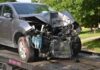
A commercial carrier’s driver logs only have to be retained for six months under federal regulation. Post-trip inspection reports are kept for three. Onboard camera footage is often overwritten in days. In a serious crash on I-285 or I-75 through Atlanta, the evidence that decides who pays begins expiring almost immediately, and nothing about the process of recovering from injuries will remind you of that.
This guide covers the sequence that actually matters after a severe collision in Georgia: what to do at the scene, how to handle medical care in a state with no no-fault coverage, the very different mechanics of a commercial truck case, and the deadlines that quietly end claims. If a tractor-trailer or commercial vehicle was involved, consulting a truck accident lawyer in Atlanta within the first week is not a legal formality; it is what triggers the preservation demands that keep those records from being lawfully destroyed.
The First Hour: Scene, Safety, and Triage
Move to a safe location if the vehicles are drivable and you are able. On Atlanta’s interstates, secondary crashes into a disabled vehicle cause a meaningful share of serious injuries, and Georgia’s move-over and hazard-lamp rules exist for that reason. Call 911 regardless of how the damage looks. Georgia requires that a crash involving injury, death, or apparent property damage of 500 dollars or more be reported, and 500 dollars in modern bodywork is a scuffed bumper cover.
Say as little as possible about fault. The two most damaging sentences at any scene are an apology and a statement that you are fine. Both are recorded in the officer’s narrative or the other driver’s statement, and both surface months later when the claim is valued. Describe what happened factually, and if you do not know something, say you do not know.
Accept evaluation from EMS even if you intend to decline transport. Adrenaline reliably masks symptoms for the first 24 to 72 hours, and the injuries most often missed at the scene, including concussion, internal bleeding, and lumbar flexion injuries from the seat belt, are the ones with the worst outcomes when delayed. Metro Atlanta’s field triage protocols route serious mechanism-of-injury patients to a Level I trauma center rather than the nearest emergency department for exactly this reason.
Documentation That Decides the Claim Months Later
Assume nobody will preserve anything for you. What you capture in the first hour, and request in the first week, becomes the foundation of the case:
- Photograph all vehicles from every corner, plus the interior, the license plates, the roadway, skid marks, debris, traffic controls, and the surrounding businesses whose cameras may face the scene.
- Photograph the other driver’s license, insurance card, and, if commercial, the DOT number and carrier name on the cab door. That number is how the entire regulatory file is later located.
- Get names and phone numbers of independent witnesses. Their information does not always make it into the report, and once they drive away they are usually unfindable.
- Note the responding agency and the case number so you can obtain the Georgia Uniform Motor Vehicle Accident Report, typically available within a few days to two weeks.
- Ask nearby businesses in person, that day or the next, whether their cameras cover the location. Most systems overwrite in 14 to 30 days.
- Start a dated log of symptoms, missed work, medications, and activities you can no longer do. Contemporaneous notes are far more persuasive than recollection assembled a year later.
Once the report is available, read it carefully. Diagrams, contributing factor codes, and witness lists are frequently wrong or incomplete, and knowing how to use health and safety documentation properly is what separates a claim that gets taken seriously from one that gets discounted.
Medical Care in a State With No No-Fault Coverage
Georgia repealed its no-fault system in 1991. There is no mandatory personal injury protection, which means your medical bills are not automatically paid by anyone while the claim is pending. That single fact drives most of the financial stress after a serious crash, and it surprises people who have moved from Florida, New York, or Michigan.
Your realistic options are optional medical payments coverage on your own auto policy, if you bought it, your health insurance, or treatment on a letter of protection where a provider agrees to be paid from the eventual settlement. Each has consequences. Health insurance keeps bills at negotiated rates but generates a subrogation claim. A letter of protection preserves cash flow but creates a larger lien and invites the defense argument that treatment was litigation-driven. Establishing care promptly at a car accident clinic near me or with your own physician matters most in the first week, because a treatment gap is the easiest thing for an adjuster to use against you.
Georgia also has a hospital lien statute that lets a hospital perfect a lien against your recovery by filing in the county records within a short window after discharge. Those liens are frequently asserted at full billed charges rather than negotiated rates, and challenging them is often worth more to your net recovery than an extra few thousand dollars on the gross settlement.
Why a Truck Case Is Not a Bigger Car Case
A collision with a commercial motor vehicle brings an entire federal regulatory scheme into play. Interstate carriers operate under the Federal Motor Carrier Safety Regulations, and violations of those rules are frequently the clearest proof of negligence available.
- Hours of service under 49 CFR Part 395: an 11-hour driving limit within a 14-hour window, a required 30-minute break, and 60- or 70-hour weekly limits. Electronic logging devices record this, and the underlying data is far harder to alter than the paper logs it replaced.
- Driver qualification files under Part 391, including medical certification, road test, and prior employment safety history.
- Drug and alcohol testing under Part 382, including post-accident testing requirements and the FMCSA Clearinghouse.
- Inspection, repair, and maintenance records under Part 396, including driver vehicle inspection reports.
- Minimum financial responsibility of 750,000 dollars for general freight under 49 CFR 387.9, with far higher requirements for certain hazardous materials. That is 30 times a Georgia driver’s minimum liability limit, which is why identifying every potentially liable entity matters.
Retention periods are the reason speed is essential. Records of duty status must be kept for six months. Inspection reports are kept for months, not years. Telematics and dashcam data are frequently overwritten on short cycles. A preservation letter sent within days is the only thing that converts a lawful destruction schedule into a spoliation problem for the carrier.
Liability also extends beyond the driver. The motor carrier, the broker, the shipper, the trailer owner, and a maintenance contractor can each carry separate coverage. Georgia has historically permitted a direct action against the insurer of certain intrastate motor carriers, a rule narrowed by legislation taking effect in 2025, so whether an insurer can be named as a defendant now depends on the carrier’s registration and the timing of the crash.
| Issue | Typical car crash claim | Commercial truck claim |
|---|---|---|
| Available coverage | Often state minimum 25/50/25 in Georgia | 750,000 dollars federal minimum, frequently layered excess policies |
| Evidence sources | Crash report, photos, driver statements | Plus ELD data, DVIRs, driver qualification file, telematics, dashcam |
| Preservation urgency | Vehicle before repair or salvage | Days, because federal retention periods are measured in months |
| Potential defendants | The other driver | Driver, motor carrier, broker, shipper, trailer owner, maintenance vendor |
| Investigation on the other side | Adjuster assigned within days | Rapid response team, often at the scene within hours |
| Governing standards | Georgia traffic law | Georgia traffic law plus the Federal Motor Carrier Safety Regulations |
Georgia Rules That Change What Your Claim Is Worth
Three Georgia-specific rules do more work than most people expect. First, Georgia applies modified comparative negligence under O.C.G.A. section 51-12-33, and the bar is at 50 percent, not 51. A plaintiff found equally at fault recovers nothing, which makes small allocations of blame genuinely decisive rather than merely reductive.
Second, Georgia uninsured motorist coverage comes in two forms, and the difference is large. Add-on or stacking coverage sits on top of the at-fault driver’s limits, so a 25,000 dollar liability policy plus 50,000 dollars of add-on UM produces 75,000 dollars of available coverage. Reduced or set-off coverage subtracts the liability payment, producing only 50,000 dollars in the same scenario. Most people do not know which they bought until they read the declarations page after a crash.
Third, Georgia law provides that failure to wear a seat belt is generally not admissible to show negligence or to reduce damages in a civil case. Adjusters occasionally raise it anyway during negotiation, where the rules of evidence do not formally apply.
The Deadlines, Including the Short Ones
Georgia allows two years from the date of injury to file a personal injury suit under O.C.G.A. section 9-3-33, and four years for property damage. Wrongful death also carries a two-year period, though it can be tolled while a related criminal prosecution is pending.
The traps are the ante litem notices. A claim against a Georgia municipality requires written notice within six months. A claim against a county requires notice within twelve months. A claim against the State of Georgia under the Georgia Tort Claims Act requires notice within twelve months, sent by certified mail to the Department of Administrative Services and the agency involved. Georgia courts enforce the content and delivery requirements of these notices strictly, and a defective notice can be as fatal as no notice at all. If a MARTA bus, a county truck, a school vehicle, or a state maintenance crew was involved, that clock started at the crash.
Frequently Asked Questions
Should I give the other driver’s insurer a recorded statement?
You are not obligated to give a recorded statement to the other driver’s carrier, and there is rarely an advantage to doing so early. You do owe cooperation to your own insurer under your policy. If you agree to any statement, know your medical situation first, answer only what is asked, and never estimate speeds, distances, or times you did not actually observe.
How soon must I see a doctor after a crash in Georgia?
As soon as possible, ideally the same day and certainly within 72 hours. Georgia has no legal deadline for treatment, but the gap between the crash and the first visit is the most common argument insurers use to attribute injuries to something else. Continuous, documented treatment matters more to the value of a claim than any single diagnostic finding.
What if the at-fault driver only carries minimum limits?
Then your uninsured and underinsured motorist coverage becomes the main source of recovery, and whether you bought add-on or reduced UM determines how much is actually available. In truck cases the analysis differs entirely, because federal minimums are far higher and multiple entities frequently carry separate policies. Identify all potential defendants before accepting any limits tender.
How long does a serious injury case take in Georgia?
A claim typically cannot be presented until treatment is complete or a physician can state a long-term prognosis, so a few months at minimum. Cases that settle before suit often resolve within six to twelve months of that point. Filed cases in Fulton, DeKalb, Cobb, and Gwinnett counties commonly take a year or more to reach trial, and truck cases with contested liability run longer.
Does my own health insurance have to be repaid?
Usually yes. Private plans, self-funded employer plans governed by ERISA, Medicare, and Medicaid all assert reimbursement rights against injury settlements. The amounts are frequently negotiable, particularly where available coverage is limited. Resolving liens before the settlement is finalized is what determines the amount that actually reaches you.
Do I have a case if I was partly at fault?
Yes, as long as you are found less than 50 percent responsible. Your recovery is reduced by your percentage of fault. At exactly 50 percent or more, Georgia bars recovery entirely, which is why fault allocation is contested so aggressively even in cases where the other driver clearly did something wrong.
What to Do Next
Pick the single most time-sensitive item and handle it this week. If a commercial vehicle was involved, that is a written preservation demand to the carrier covering logs, ELD data, dashcam footage, inspection reports, and the driver qualification file, because those records can be lawfully destroyed on schedule while you are still in physical therapy. If it was a passenger vehicle crash, it is preventing your vehicle from being repaired or salvaged before the damage and event data are documented, and getting into consistent medical care.
Related reading: 7 Things You Should Never Do Immediately After a Collision and more in Accidents Law.
This article is general information about Georgia injury claims and is not legal or medical advice; consult a licensed professional about your specific situation.