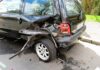
Hit and run cases are difficult from both sides. For the injured person, the defendant is often unidentified and the evidence trail cools within days. For someone accused, Texas treats leaving the scene of an injury collision as a felony — and the central question is usually not whether a collision happened but whether the driver knew it had.
This guide covers the five recurring challenges, from both perspectives, and what can actually be done about each.
Key Takeaways
- Texas law requires drivers to stop, give information and render aid; failing to do so after an injury collision is a felony, with severity scaling to the harm caused.
- The offence generally requires knowledge that a collision occurred, which is the element most often contested.
- Uninsured motorist coverage is usually the injured person’s main route to recovery when the driver is never identified.
- Many policies require physical contact with the unidentified vehicle, so “phantom vehicle” claims need corroboration.
- Physical evidence — paint transfer, debris with part numbers, camera footage — degrades or is overwritten within days.
1. Identifying the Driver
Everything for the injured party depends on this, and the window is short.
What actually identifies vehicles: debris left at the scene, since bumper fragments, mirror housings and light assemblies frequently carry part numbers that narrow make, model and year; paint transfer, which can be analysed against manufacturer databases; and camera coverage — traffic management cameras, business and residential systems, and toll or licence plate reader data along plausible escape routes.
Two practical steps matter enormously. Canvass repair shops in the area, because a vehicle with fresh front-end damage shortly after the incident is a strong lead. And request preservation of nearby footage immediately — most private systems overwrite within one to four weeks, and by the time a claim is formally opened the recording is usually gone.
Witness accounts of a partial plate are more useful than people assume. A partial combined with make, colour and direction of travel can be enough for investigators to work with.
2. Proving Knowledge, Not Intent
This is the most misunderstood element. The offence does not require an intention to cause harm or an intention to evade. It requires that the driver knew, or reasonably should have known, that a collision occurred — and in injury cases, that a person may have been involved.
That distinction creates genuine defences. A driver may not have realised they struck anything — plausible with a cyclist in a blind spot, at night, in heavy rain, with loud audio, or in a large vehicle where a low-speed impact is not felt. Damage patterns, the vehicle type, conditions and reconstruction evidence all bear on whether that account is credible.
It also cuts the other way. A driver who stopped briefly and then left, or who repaired the vehicle quickly and privately, or whose route shows an abrupt change immediately after the impact, faces evidence of awareness that is difficult to answer.
3. Police Interviews and Misstatements
For anyone contacted as a suspect, this is where cases are most often lost.
Investigators frequently approach informally — a phone call, a doorstep conversation framed as clearing something up. The instinct to explain is strong and almost always harmful. Small inconsistencies about timing, route or damage become evidence of consciousness of guilt, and an innocent explanation given badly is worse than no explanation at all.
The correct response is to state clearly that you wish to remain silent and want a lawyer, then stop. Do not repair the vehicle, do not discuss it with others, and do not post about it. Where the driver has been identified but not yet charged, prompt legal contact with investigators — including, in appropriate cases, voluntary surrender arranged through counsel — generally produces better outcomes than being located.
Anyone facing this should speak to a Houston hit and run lawyer near me or comparable local counsel before any interview, because the knowledge element is fact-specific and the account given at that first contact will shape everything afterwards.
4. Video and Photographic Evidence
Footage is decisive when it exists and unavailable when nobody asked in time.
Sources worth pursuing within days: municipal traffic cameras, business systems including fuel stations and drive-throughs, residential doorbell and security cameras along the route, dashcams from uninvolved motorists, and transit or fleet vehicle cameras. Social media appeals in neighbourhood groups have produced footage in numerous cases.
A written preservation request to each holder is what stops routine deletion. Note also that footage cuts both ways: it can establish that a driver never looked back because there was nothing perceptible to look back at, and defence counsel should pursue it as actively as claimant counsel.
Photograph the scene, the vehicle damage and any debris field before anything is cleared, and photograph injuries as they develop — the record of harm matters whether or not the driver is ever found.
5. Insurance and the Civil Claim
When the driver is never identified, uninsured motorist coverage is normally the only meaningful route to recovery, and it has conditions people rarely know about.
Most policies require prompt reporting to police and to the insurer — delay alone can jeopardise the claim. Many also require actual physical contact with the unidentified vehicle, which is why a driver forced off the road by a vehicle that never touched them faces a harder claim and needs corroborating evidence such as an independent witness.
A claim on your own uninsured motorist coverage is a claim against your own insurer, which means it is adversarial despite the relationship. Expect a request for a recorded statement or examination under oath, and take advice before giving one.
Where the driver is identified, the civil claim proceeds normally — and a criminal conviction can support it, since the standard of proof in a civil case is lower. Recovery covers medical costs, lost earnings and pain and suffering, subject to available coverage. Texas also operates a crime victims compensation programme that may assist with certain expenses where no other source is available.
Texas Penalties and Deadlines
Texas grades the offence by the harm caused. Leaving the scene where a person died is treated as a serious felony carrying substantial prison exposure; serious bodily injury is a lesser but still significant felony; other injury and property damage carry lower classifications. Penalties escalate sharply with the severity of the outcome, which is why the knowledge element is contested so hard.
On the civil side, Texas allows two years for most personal injury claims. Uninsured motorist claims are governed by the policy as well as the statute, and policy notice conditions are typically far shorter. Identify both deadlines early.
when people are distracted remain a substantial contributor to these collisions, and public safety data consistently reflects that pattern — a factor that increasingly features in both prosecution and civil claims.
What to Do Immediately
- Call police and get a report number — this is a condition of most uninsured motorist claims.
- Write down everything you recall about the vehicle: colour, make, body style, damage, partial plate, direction.
- Photograph the scene, debris and damage before anything is moved or cleared.
- Ask nearby businesses and residents about cameras, and request preservation in writing the same day.
- Get medically assessed immediately and continue treatment consistently.
- Notify your own insurer promptly and ask specifically about uninsured motorist coverage.
- Get legal advice within days — for evidence preservation if you were injured, and before any interview if you are a suspect.
Frequently Asked Questions
What if the driver is never found?
Uninsured motorist coverage on your own policy is usually the main route to recovery, subject to prompt reporting and any physical contact requirement. State victim compensation programmes may also assist.
Is leaving the scene always a felony in Texas?
No. Grading depends on the harm caused, from felony exposure where someone is killed or seriously injured down to misdemeanour classifications for property damage.
What if I genuinely did not know I hit anything?
Knowledge is an element of the offence, so this is a recognised defence. Its strength depends on the vehicle, the impact, the conditions and the physical evidence — and it should be advanced through counsel rather than in an informal interview.
Should I go to police if I think I was involved?
Speak to a lawyer first. Voluntary contact arranged through counsel generally produces better outcomes than being traced, but the approach and the account both need to be handled properly.
How long do I have to bring a civil claim?
Generally two years in Texas for personal injury, but policy notice conditions for uninsured motorist claims are much shorter. Check both.
Does a conviction help my civil case?
It can substantially, since the civil standard of proof is lower. But a civil claim does not depend on a conviction and can succeed without one.
The Bottom Line
Both sides of a hit and run case turn on the same two things: physical and video evidence that expires within days, and the question of what the driver actually knew. Preserve the evidence immediately, report promptly so the insurance route stays open, and — if you may be the driver — say nothing until you have counsel.
This article is general information, not legal advice. Offence grading, deadlines and policy conditions vary — confirm your position with a qualified attorney.
Related reading: The Factors You Need to Consider When Hiring a Personal Injury Lawyer and Can You Sue After a Hit-and-Run? What to Know.
Explore more in Accidents Law.