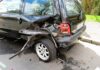
Image generated by Gemini
New York’s serious injury threshold is a legal standard that determines when you can pursue a claim outside the no-fault system. Insurance Law Section 5102(d) requires proof of a severe medical condition, such as a fracture, significant disfigurement, permanent organ damage, or an injury that keeps you from your routine for at least 90 out of 180 days after the crash.
New York is a no-fault state. Your own PIP insurance pays up to $50,000, no matter who is at fault, but doesn’t cover pain or emotional trauma. To get more serious damages, your injuries must meet the serious injury threshold.
What Qualifies as a “Serious Injury” Under Section 5102(d)?
The threshold prevents minor-injury lawsuits. To sue an at-fault driver, your medical records must fit one of these categories:
- Death or Dismemberment: Any fatal injury or the traumatic loss of a limb or body part.
- Significant Disfigurement: Permanent alterations or visible scarring that a reasonable person would find objectionable or unattractive.
- Bone Fracture: Any medically confirmed break or fracture, regardless of the severity or location.
- Loss of a Fetus: The tragic termination of a pregnancy directly resulting from the accident.
- Permanent Loss of Use: Total and permanent loss of a body organ, member, function, or system (even without physical removal).
- Permanent Consequential Limitation: A lasting, medically significant limitation of a body organ or member (requires objective proof of a “significant” rather than “minor” limitation).
- Significant Limitation of a Body Function or System: A meaningful restriction of a body system that is not necessarily permanent but is important and lasts for an extended period.
- The 90/180-Day Rule: A medically determined, non-permanent injury that prevents you from performing all of your usual and customary daily activities substantially for at least 90 of the first 180 days following the accident.
The 90/180-Day Rule
This standard is often disputed for being subjective. If you rely on it, prompt and ongoing medical documentation of your limits after the crash is essential. Without it, your claim may be denied.
How the Threshold Affects Settlement Values
Meeting the serious injury threshold greatly impacts your case’s value. By filtering out minor claims, it focuses litigation on more serious injuries with higher settlements.
Location matters too. In New York City, cases settle for 42% more than the state average, driven by inflated medical costs and a higher cost of living.
This financial pressure has caused political debate. Governor Hochul proposed redefining the threshold to reduce fraud and premiums, while the Trial Lawyers Association opposes it, saying it would limit victims’ rights.
| Feature | No-Fault PIP Claim | Serious Injury Lawsuit |
| Proof of fault required? | No | Yes |
| Damages recoverable | Economic only (medical bills, lost wages) | Economic + non-economic (pain and suffering) |
| Maximum recovery | Policy limit (minimum $50,000) | No statutory cap (depends on defendant’s policy and assets) |
Pursuing Damages When You Share Some Blame
Crossing the serious injury threshold is just the first step. Next comes proving liability. Many accident victims assume they can’t sue if they partly caused the crash, but that’s not how it works in New York.
Liability in this state is governed by a pure comparative fault standard. This means that an injured party can still recover even if they bear the vast majority of the responsibility for the incident. Rather than barring a claim entirely, the law simply scales the compensation to match the defendant’s degree of fault. For instance, a plaintiff found 30% at fault in a collision would see a $200,000 verdict reduced to a net recovery of $140,000.
Fault is rarely black-and-white, especially in multi-vehicle pileups or contested right-of-way disputes. If you’ve been told you can, can you sue if you’re partially at fault? That doesn’t disqualify you from filing a claim, does it? Accident reconstruction evidence, witness testimony, and traffic camera footage can all help reduce the share of blame assigned to you.
Never admit partial fault at the scene or give recorded statements to insurers. Adjusters can use early statements against you to reduce your payout.
Protecting Your Right to Full Compensation
Section 5102(d) is the barrier between a basic PIP claim and a lawsuit. Once you clear the injury threshold, focus on strong medical evidence and disputing unfair fault allocation. These two factors will determine the value of your case.
If you want to know about How to Manage Complex Legal Claims After Catastrophic Accidents then visit our Accidents Law category.