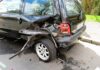
Discovering after a collision that your policy lapsed is a specific and unpleasant category of problem. It is also more common than people assume — a card that expired, an autopay that failed, a renewal notice that went to an old address — and the consequences run well beyond a citation.
This guide covers what actually happens next, in what order, and what can still be done.
Key Takeaways
- Coverage is determined by whether the policy was in force at the moment of the collision. Reinstating afterwards does not retroactively cover it.
- Grace periods are a feature of some policies, not a legal entitlement, and they vary — check your own documents rather than assuming.
- Without coverage you are personally liable for the other party’s damages, and judgments can reach wages, bank accounts and property.
- Several states restrict what an uninsured driver can recover even when the other driver was entirely at fault.
- Being uninsured does not remove your right to medical treatment or to pursue an at-fault driver for economic losses in most states.
Legal Consequences of Driving Without Insurance
Nearly every state requires proof of financial responsibility, and the penalties for driving without it typically include fines, licence and registration suspension, reinstatement fees, and in some states vehicle impoundment. Repeat findings escalate, and a few jurisdictions treat subsequent offences as criminal rather than civil.
A separate requirement often follows: filing a certificate of financial responsibility with the state — commonly known as an SR-22 or, in some states, an FR-44 — for a period of years. That filing is a formal notification by an insurer that coverage is in place, and it must be maintained continuously. Any lapse during the filing period restarts consequences.
Where an accident caused injury, the exposure increases. Some states suspend driving privileges until damages are paid or a payment arrangement is agreed, independent of any finding of fault.
Financial Liability After a Crash
This is the substantial risk, and it is not capped by what a policy would have covered.
If you caused the collision and had no coverage, you are personally responsible for the other party’s vehicle damage, medical treatment, lost earnings and — depending on the state and the injuries — pain and suffering. Their own insurer may pay them under their uninsured motorist coverage and then pursue you directly through subrogation, which means a claim arrives even if the other driver never contacts you.
A judgment can be enforced through wage garnishment, bank levies and liens on property, subject to state exemptions, and it may remain enforceable for many years with the ability to renew. Bankruptcy can discharge ordinary judgment debt, but debts arising from driving while intoxicated are generally not dischargeable.
If you were not at fault, your position is better but not unaffected. You can generally still claim against the at-fault driver for your losses — though several states have enacted provisions restricting an uninsured driver’s ability to recover non-economic damages even where the other party was entirely to blame. Economic losses such as medical costs and lost wages usually remain recoverable.
Is There a Grace Period?
This is the question people most want answered, and the honest answer is that it depends on the policy rather than on the law.
Some insurers allow a short window after a missed premium during which coverage continues; others cancel with effect from the due date once notice requirements are met. Notice of cancellation is regulated in most states, so an insurer generally cannot cancel silently — but a notice sent to a stale address still counts as sent.
Similarly, continuous coverage matters when a new policy is purchased: a gap between policies is recorded, affects future pricing, and cannot be closed retroactively.
What determines everything is whether the policy was in force at the moment of the collision. Buying a policy hours afterwards does not cover it, and attempting to obtain coverage and then report the accident as occurring later is insurance fraud — a criminal offence that turns a manageable civil problem into a serious one.
Do check the details before assuming the worst, though. Coverage sometimes exists where people think it does not: a spouse’s policy covering resident relatives, a permissive-use provision on the vehicle owner’s policy if you were driving someone else’s car, a rental company’s coverage, an employer’s commercial policy if you were working, or a credit card benefit for rentals. Establishing an expired auto policy after an accident is a question of fact worth checking rather than conceding.
What to Do Immediately
- Handle the scene normally — check for injuries, call police, exchange information. Do not flee, which converts a civil problem into a criminal one far worse than the lapse.
- Do not lie about coverage. Say you will confirm your insurance position rather than asserting something you have not checked.
- Get medically assessed if there is any chance you were injured. Lack of coverage does not remove your right to treatment or to claim against an at-fault driver.
- Check every possible source of coverage — your own policy status in writing, household policies, the vehicle owner’s policy, employer coverage, rental or card benefits.
- Obtain written confirmation from your insurer of the exact cancellation date and the notice sent, since defective cancellation is sometimes challengeable.
- Get legal advice before responding to any claim or signing anything, particularly if anyone was injured.
- Do not ignore correspondence. Default judgments are entered when people stop opening letters, and they are harder to undo than to defend.
Long-Term Impact on Future Insurance
A lapse affects pricing for years. Insurers treat continuous coverage history as a rating factor, so a gap raises premiums independently of any accident or violation. Add a certificate filing requirement and the increase compounds.
Practical steps that reduce recurrence: set renewal reminders independently of the insurer’s notices; keep payment card details current, since expired cards are the most common cause of unintended lapse; update your address with both the insurer and the licensing authority; and if you are cancelling a policy because you have sold the vehicle, confirm in writing rather than by stopping payment.
If affordability is the underlying issue, options include raising deductibles, reducing optional cover, usage-based programmes, and state assigned-risk pools which exist precisely for drivers unable to obtain coverage in the ordinary market. Any of those is cheaper than a judgment.
Frequently Asked Questions
Can I buy insurance right after the accident to cover it?
No. Coverage applies from the effective date forward, and misrepresenting when the accident occurred is fraud. Buying a policy immediately is still sensible for the future.
What if the other driver was at fault?
You can generally still claim your economic losses. Some states restrict an uninsured driver’s recovery of pain and suffering even where they were blameless, so check your state’s rule.
Can they take my house or wages?
A judgment can be enforced through garnishment, levies and liens, subject to state exemptions which sometimes protect a primary residence. Take advice on the exemptions where you live.
Was I covered under someone else’s policy?
Possibly. Resident relative provisions, permissive use by a vehicle owner, employer coverage and rental benefits all catch people who believed they were uninsured. Check before conceding.
How long will this affect my premiums?
Coverage gaps typically affect pricing for several years, and any certificate filing requirement runs for a period set by the state.
Should I just ignore the claim letter?
No. Ignoring correspondence produces a default judgment, which is significantly harder to challenge than the underlying claim would have been.
The Bottom Line
An insurance lapse discovered after a collision is serious but rarely as absolute as it first appears. Check every possible source of coverage, confirm the cancellation date and notice in writing, get advice before responding to any claim, and never ignore correspondence. The worst outcomes in these cases come from panic and avoidance rather than from the lapse itself.
This article is general information, not legal advice. Insurance requirements, recovery restrictions and enforcement exemptions vary substantially by state — consult a qualified attorney.
Related reading: What Will a Car Accident Attorney Actually Do for You.
Explore more in Accidents Law.