A jury duty summons lands in the mail, and your first thought is usually the calendar rather than civics. You want to know how many workdays you lose, what the court pays, and whether you can move the date. This guide answers those questions from the rules federal and state courts publish themselves.
Short answer: Jury duty is compulsory court service. Responding to the summons is mandatory, though most people who show up are never seated on a trial. Federal courts pay $50 a day, while state rates run from a few dollars to $72. You can ask to postpone, and your employer cannot fire you for going.
Key takeaways
- Responding is required. Skipping the notice can bring a fine or a contempt hearing.
- Most states now run a one-day or one-trial system, so the common outcome is a single wasted morning.
- Federal pay starts at $50 per day. State pay varies more than most people expect.
- An exemption is automatic and narrow. An excuse is a request the court can refuse.
- Federal law protects your job, but it does not force your boss to keep paying you.
What to expect at a glance
| Question | Short answer |
|---|---|
| Who gets called | US citizens 18 and older, drawn at random from voter, driver and state ID lists |
| Typical term | One day or one trial in most state courts, longer on call in some federal districts |
| Federal pay | $50 per day, up to $60 after 10 days of service |
| State pay | Set by each state, from $15 in California to $72 in New York |
| Can you skip it | No. You can request a postponement or an excuse instead |
| Job protection | Federal law bars firing a permanent employee over federal service |
What jury duty is, and why your name came up
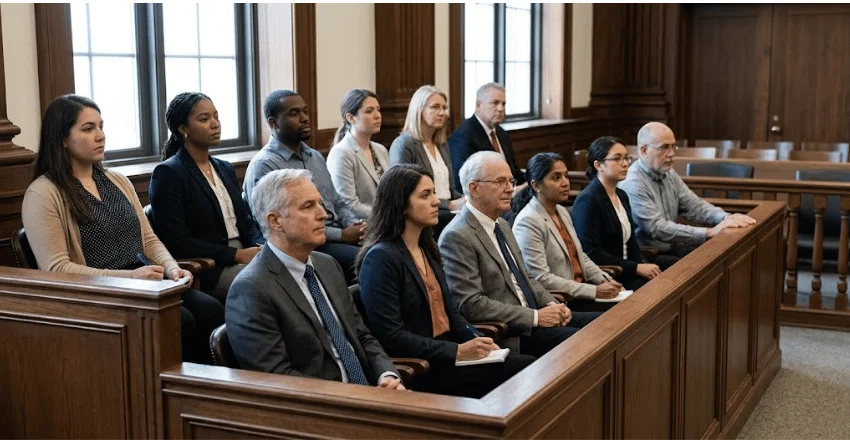
Courts build their juror pool from public lists. Most federal districts start with voter registration records, and many state courts add licensed drivers, state ID holders, and taxpayers. A computer draws names at random, so there is no pattern to game.
Once seated, you decide facts. The judge handles the law, rules on objections, and tells you the standard to apply. In a criminal case that standard is proof beyond a reasonable doubt, the threshold every criminal defense attorney builds a case around. Civil trials use a lower bar, usually whichever side’s evidence is more convincing.
Nobody expects legal training from you, or an opinion on the statute. The job is to listen, weigh two accounts, and say which one rings true.
Two mailings, not one
Plenty of people panic at the first envelope, then discover it was never a summons. Courts send two separate mailings, weeks or months apart.
- The qualification questionnaire. This asks about your citizenship, age, residency, English fluency, and felony record. Return it by the printed deadline. It does not mean you have a court date.
- The summons. This names a courthouse, a reporting date, and a check-in time. It is a court order. This is the one you answer or ask to move.
Read whichever notice you hold before planning around it. A questionnaire filed late is why some people end up with a summons marked must serve, with no postponements left.
How long does it last?
Most state courts now use a one-day or one-trial term. You report once. If no panel needs you, your obligation ends that afternoon and you are done for a year or more. California, Texas and Florida all work this way.
Getting picked changes the math. A typical state criminal or civil trial runs three to five days, and complex ones run longer. Federal service is often structured as a term instead: you stay on call for two weeks or a month, phoning in the night before to learn whether to come in.
Grand juries run on a different clock. Those panels meet part time for months, usually only a few days each month.
What actually happens on your reporting day
Check-in comes first, then an orientation video, then waiting. Court staff call groups by number and walk them to a courtroom for questioning. Bring something to read, because the waiting is the bulk of it.
The questioning stage is called voir dire. The judge and the attorneys ask about your job, your connections to anyone involved, and any views that would stop you from judging the evidence fairly. If a term like that leaves you guessing, Black’s Law Dictionary is the standard reference for the courtroom vocabulary you will hear all day.
Two things can then remove you. An attorney can challenge you for cause, arguing you cannot be impartial, and the judge decides. Each side also gets a few peremptory strikes, which need no reason at all. Plenty of people who report never sit on anything.
What jurors actually get paid
The federal fee is set by statute. The Administrative Office of the U.S. Courts publishes the current rate: federal trial jurors earn $50 a day, and become eligible for up to $60 a day after 10 days of service. Grand jurors reach that higher rate after 45 days. Federal government employees receive their regular salary in place of the fee, and courts reimburse transportation and parking for everyone else.
State courts set their own rates, and the spread is wide enough to surprise people who assume the federal figure applies everywhere.
| Court | Daily juror pay | Worth knowing |
|---|---|---|
| Federal district courts | $50, up to $60 after 10 days | Transportation and parking reimbursed |
| California | $15, starting on day two | At least 34 cents per mile, or up to $12 for transit |
| Texas | At least $20 day one, at least $58 after | Paid by the county, not the state |
| New York | $72 | Serving usually blocks another summons for six years |
| Florida | $15 for three days, then $30 | The first three days are unpaid if your employer keeps paying you |
Treat these as attendance fees rather than wages. None of them replaces a full day of income, which is exactly why hardship requests exist.
Who qualifies, who is exempt, and who can ask to be excused
These three words get used as if they mean the same thing. They do not, and the difference decides whether you fill in a box or write a letter.
Qualification
To serve on a federal panel, you must be a US citizen, at least 18, and a resident of the district for a year. The court also expects enough English to read, write, and follow the proceedings. Anyone facing felony charges carrying more than a year, or carrying a felony conviction without restored civil rights, is disqualified.
Exemption
An exemption is automatic, and the federal list is short. It covers active-duty armed forces and the National Guard, full-time professional police and fire personnel, and public officials engaged in their official duties. You claim it, and you are out. States add their own categories, and Texas, for example, lets residents over 75 claim a permanent exemption.
Excuse or deferral
Everything else is a request. Federal courts may excuse people over 70, volunteer firefighters and emergency crew, and anyone who served federally within the past two years. Beyond that, judges weigh undue hardship or extreme inconvenience case by case.
Hardship requests work best with proof and a specific ask. A sole caregiver, a self-employed contractor, or a student mid-semester should say so in writing, attach evidence, and propose a later month. Asking to move the date succeeds far more often than asking to escape it.
What happens if you ignore the summons
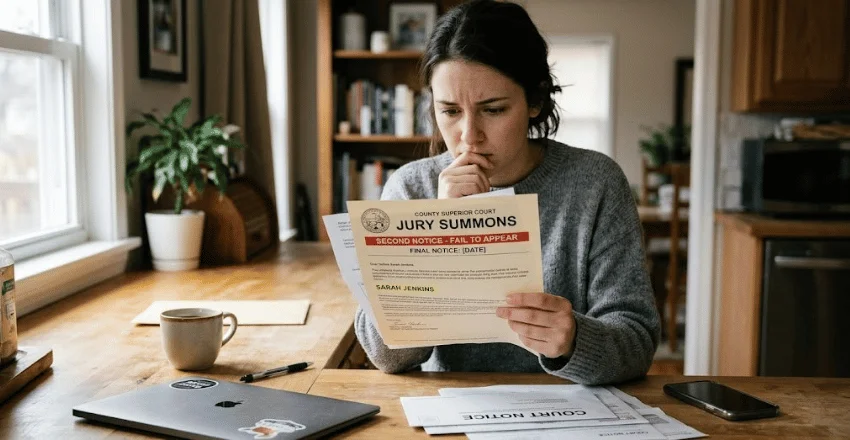
Nothing, for a while, which is what misleads people. Courts send a follow-up, then an order to appear and explain yourself.
From there, the penalties are real. Federal law allows a fine, imprisonment, community service, or all three for failing to appear. State ranges differ, but fines in the hundreds of dollars and a contempt finding are common. Judges prefer an explanation to a punishment, so call the clerk before the date, not after.
One warning worth repeating: federal courts have flagged a persistent scam in which callers claim you missed service and demand payment by gift card or wire transfer. No court collects a missed juror fine by phone. Hang up and call the courthouse number printed on your notice.
Your job is protected; your paycheck may not be
Under 28 U.S.C. 1875, no employer may fire, threaten, intimidate or coerce a permanent employee because of federal court service. An employer who breaks that rule faces damages for lost wages, a court order to reinstate you, and a civil penalty of up to $5,000 for each affected employee. Reinstated workers are treated as though they had simply been on leave.
Every state has a comparable protection for its own courts. What almost no law requires is pay. Some states make employers cover part of the early days, and many companies offer paid leave as a benefit. Check your handbook before assuming either way, and tell your manager as soon as the summons arrives.
Grand jury and trial jury are not the same job
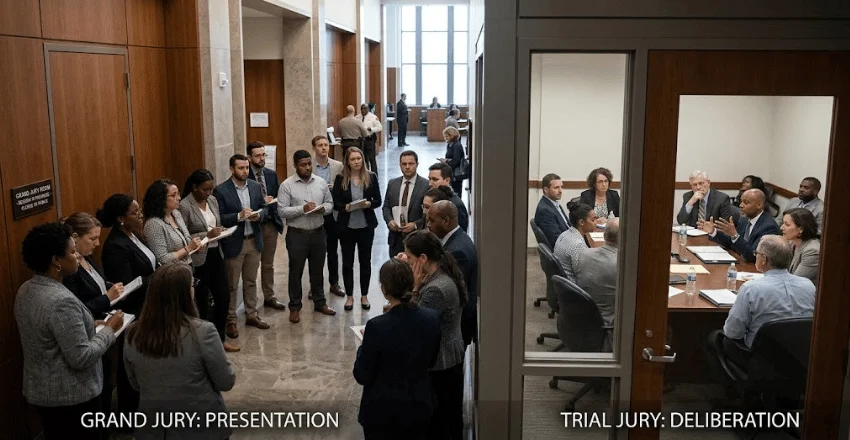
A trial panel, sometimes called a petit jury, seats 6 to 12 people. You hear both sides, then deliberate in private until you reach a verdict. Federal criminal verdicts must be unanimous, and a deadlocked panel is a hung jury. That is one of the situations that produce mistrials, and the case can be tried again.
A grand jury is bigger, 16 to 23 people, and its work is closed to the public. It hears only the prosecution and decides whether there is probable cause to indict. No defendant, no defence attorney, no verdict of guilt. Expect a longer commitment on a lighter weekly schedule.
Your next step
Pull out the notice and check which of the two mailings you are holding. Return a questionnaire by its deadline. For a summons, call the clerk’s office listed on it the moment you know the date is a problem. A postponement asked three weeks early is routine paperwork, while the same request on the morning itself is a much harder conversation.
Jury duty FAQ
Rarely, unless you fall inside a listed exemption or the court accepts a permanent excuse such as age or a documented condition. Postponement is the realistic route for everyone else.
Federal courts generally leave two years between terms. States set their own gaps: New York blocks another summons for at least six years.
Business casual is the safe answer. Most courthouses ban shorts, tank tops, and hats, and you pass a metal detector, so skip the extra jewelry.
Usually yes at the federal level, though federal employees receive salary instead. Florida and some other states withhold the early daily fee from jurors whose wages continue.
In the waiting room, generally yes. Inside a courtroom, no. Once you are seated, discussing the case or searching it online can wreck the trial.