If you searched “petitioner is who,” the simple answer is the person or organization asking a court or government agency to take legal action. That party usually starts the proceeding by filing a document called a petition. The exact label can change depending on the type of case, so context matters.
Direct answer: In U.S. legal proceedings, the petitioner is the party that files a petition asking a court or agency for a decision or other relief. The opposing party is commonly called the respondent. In appeals, family cases, tax disputes, and immigration matters, the same basic idea applies even though the procedure differs.
| Key question | Quick answer |
|---|---|
| Formal role | Petitioner |
| What starts the role? | Filing a petition or request for review |
| Opposing party | Usually the respondent |
| Common case types | Family law, appeals, tax cases, immigration, protective orders |
| Same as a plaintiff? | Sometimes similar, but the terms are not always interchangeable |
| Does filing first guarantee an advantage? | No |
| Can a person represent themselves? | Yes, when court rules permit pro se representation |
Key takeaways: The filing party is usually the person asking the court or agency to do something. The other side normally responds to that request, which explains the term “respondent.” Always read the caption and the first filed document because terminology differs between courts and legal proceedings.
What Does the Term Mean in U.S. Law?
The Legal Information Institute at Cornell Law School defines a petitioner as the party that files a petition with a court. A petition is a formal request asking a court or other legal authority to take a particular action. The requested action could involve ending a marriage, reviewing an agency decision, granting a protective order, or deciding another legal issue.
The word describes a procedural role rather than whether someone is right or wrong. Filing the case first does not prove the filer’s allegations, and it does not make the other side legally responsible for anything. Both sides generally retain the right to present arguments, evidence, and legal defenses under the rules governing the proceeding.
Petitioner Is Who in Different U.S. Cases?
The meaning becomes clearer when you look at the type of proceeding involved. U.S. courts and agencies use different party names because divorce petitions, administrative appeals, and immigration filings follow different procedures. The table below shows how the role commonly works.
| Type of case | Who usually files? | Other party or related role | What is being requested? |
|---|---|---|---|
| Divorce or family case | Spouse starting the case | Respondent | Divorce, custody, support, or related relief |
| Protective-order case | Person seeking court protection | Respondent | Restrictions or protective relief |
| Appeal or review | Party seeking review | Respondent or appellee | Review or change of an earlier decision |
| U.S. Tax Court | Taxpayer bringing the dispute | IRS Commissioner | Review of certain IRS determinations |
| Family immigration | U.S. citizen or qualifying permanent resident filing for a relative | Beneficiary | Recognition of a qualifying immigration relationship |
In many family-law proceedings, the spouse who files first is normally the petitioner, while the other spouse is called the respondent. The same labels commonly appear in protection-order proceedings, where one person asks the court to restrict another person. LawGaze explains the roles in practical context in its order of protection guide and its discussion of uncontested divorce proceedings.
Appeals require extra care because courts do not all use the same labels. Federal court materials explain that the party seeking appellate review may be called an appellant or a petitioning party, while the opposing side may be called an appellee or respondent. If you are reading appeal papers, LawGaze’s guide to legal briefs can also help explain the written arguments submitted to a court.
Tax Court provides another clear example because the taxpayer is the petitioner when bringing a qualifying dispute before that court. The Commissioner of Internal Revenue is the respondent, and the case begins with a timely petition. The U.S. Tax Court specifically uses those terms in its guidance for people bringing cases.
Immigration uses the same word in a different setting because USCIS calls the filer a petitioner in many petition-based processes. In a family immigration matter, a U.S. citizen or lawful permanent resident may file Form I-130 for a qualifying relative, while that relative is generally described as the beneficiary. Readers navigating that process can also review LawGaze’s family immigration timing guide for background.
Petitioner vs. Respondent: What Is the Difference?
The petitioner asks the court or agency to take action, while the respondent is the party expected to respond. That distinction tells you who initiated the particular proceeding, but it does not tell you who will win. A respondent may agree with part of the request, dispute everything, raise defenses, or make separate requests allowed by the applicable rules.
The labels can remain in place even after the other side files motions or asks the court for relief. For example, New Mexico court guidance explains that in a domestic case, the person filing the first pleading is the initiating party, while the other person is the respondent, and those case designations remain consistent. Local court rules still matter, so rely on the caption and instructions for your jurisdiction.
Petitioner vs. Plaintiff, Appellant, Applicant, and Beneficiary
Legal labels often sound interchangeable because several describe someone asking for something. They are not identical, and the correct word depends on the type and stage of the proceeding. A person may even have one label in the trial court and a different label during appellate review.
| Term | General meaning | Common setting |
|---|---|---|
| Petitioner | Party filing a petition or seeking specified review | Family cases, special proceedings, agency review, some appeals |
| Plaintiff | Party bringing a civil lawsuit through a complaint | Civil litigation |
| Respondent | Party responding to a petition | Family, administrative, appellate, and special proceedings |
| Appellant | Party appealing a lower court decision | Appeals |
| Applicant | Person applying for a legal or government benefit | Immigration and administrative processes |
| Beneficiary | Person for whom a qualifying benefit or petition is sought | Immigration and related matters |
A plaintiff usually starts an ordinary civil action by filing a complaint, while a petition-based proceeding uses different terminology. That difference is procedural, and both roles can describe the side that initiated a case. LawGaze’s article on what it means when a case is dismissed with prejudice provides an example of conventional plaintiff-and-defendant language in civil litigation.
Appellate terminology can be more complicated because federal courts distinguish between appeals from district courts, agency reviews, and other proceedings. U.S. Courts materials explain that “appellant” commonly describes a litigant appealing a district court decision, while “petitioner” can apply when seeking review of an administrative agency decision or another original proceeding. Reading the court’s caption and filing instructions is safer than assuming the label from the earlier case’s result.
How Can You Tell Which Role You Have?
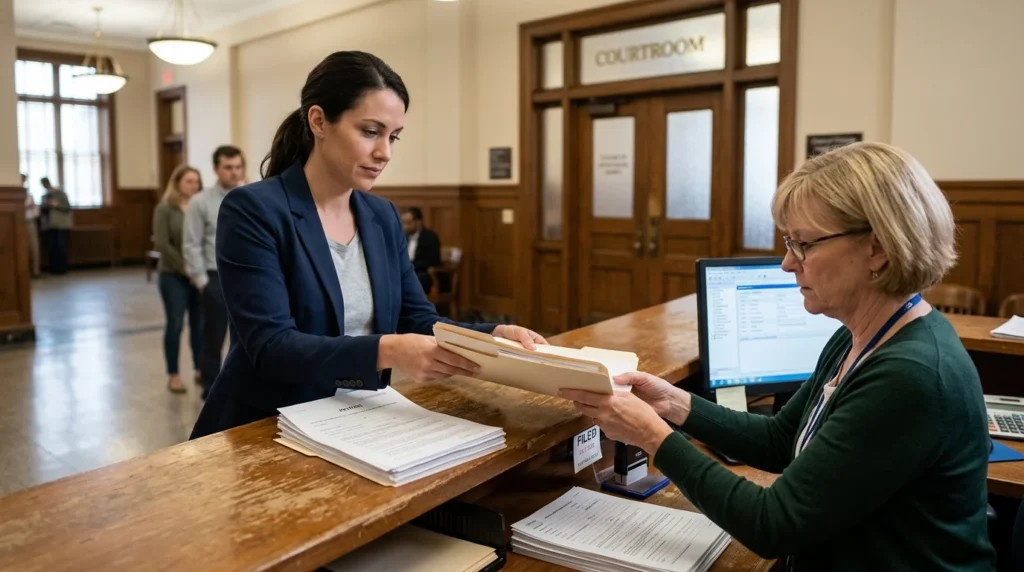
Start with the first page of your court papers and locate the case caption, which normally names the parties and case number. Then identify the document that opened the proceeding and check who filed it. Court forms and filing instructions usually repeat the same party labels throughout the case, making those documents more reliable than guessing from who is making a later request.
You should also identify the type of matter you are dealing with because the label alone doesn’t explain the procedure. Divorce, probate, protective-order, tax, immigration, and appellate proceedings can all have different filing requirements and deadlines. If a form is unclear, check your court’s official instructions or ask the clerk about procedure, while remembering that court staff generally cannot provide personal legal advice.
Does Filing the Case First Give You a Legal Advantage?
Starting a proceeding can give you practical control over when you file the initial papers and what relief you request. It does not create a presumption that the filing party deserves to win, and it does not remove the other side’s procedural rights. New Mexico’s court guidance states directly that neither side gains an advantage merely from being designated the initiating or responding party.
What matters is whether the person requesting relief satisfies the legal requirements that apply to the particular claim or proceeding. Evidence, deadlines, jurisdiction, service requirements, and the governing law can affect the result far more than the label in the case caption. In an appeal, for example, the party seeking review must identify a reversible legal error rather than simply reargue the case.
What Responsibilities Come With Filing a Petition?
Starting a legal proceeding usually means completing the correct documents, filing them with the proper court or agency, and following the required procedure for notifying other parties. Deadlines can be strict, especially in appeals, tax cases, and administrative reviews. Missing a filing or service requirement may delay a case or, in some circumstances, prevent the requested review.
The exact obligations depend on the forum and the type of relief requested. A family-court filing may involve service and financial disclosures, while an immigration filing can require proof of the claimed qualifying relationship. A federal appeal focuses heavily on the existing record and written legal arguments rather than a new trial with new witnesses.
Frequently Asked Questions
What does “petitioner is who?” mean on a court form?
It is asking you to identify the party who filed the petition or started that petition-based proceeding. Look at the case caption and the first filing rather than assuming it means the person currently asking the judge for something. Court terminology varies, so follow the instructions attached to the form.
Who is the petitioner in a divorce?
The spouse who files the divorce petition is usually the filing party, while the other spouse is the respondent. Texas legal-aid guidance, for example, uses that definition when explaining divorce paperwork. Being the first spouse to file does not by itself determine property, custody, support, or any other disputed issue.
Is the petitioner always the person who filed first?
Within many petition-based trial proceedings, the initiating party keeps that label throughout the case even when the responding side later files motions. A different stage of litigation can use a different designation, especially when a party seeks appellate review. Always check the caption for the particular court proceeding you are reading.
Is the filing party the same as a plaintiff?
The roles are similar because each can describe the side that initiates legal proceedings, but the words belong to different procedural settings. Ordinary civil actions often use plaintiff and defendant, while family matters and other petition-based proceedings commonly use filing-party and respondent terminology. State rules and the type of proceeding determine the correct label.
Who is the filing party in an immigration case?
In a family-based USCIS petition, the filer is commonly the U.S. citizen or lawful permanent resident seeking recognition of a qualifying relationship for a relative. The relative for whom the form is filed is generally called the beneficiary. Other immigration categories use these terms differently, so always check the specific USCIS form and instructions.
Can the responding side file its own requests with the court?
Yes, being the responding party does not normally prevent someone from asking the court for relief permitted by procedural rules. Depending on the case, that person may file motions, counterclaims, responses, or requests relating to issues already before the court. Filing such a document does not necessarily change the original labels shown in the case caption.
Your Next Step
If you see unfamiliar party labels on U.S. legal papers, begin with the caption, identify who filed the opening document, and confirm the type of proceeding. Then check the official rules or instructions for the court or agency handling the matter because terminology and procedures can differ by jurisdiction.